Do Cigars Have Nicotine?
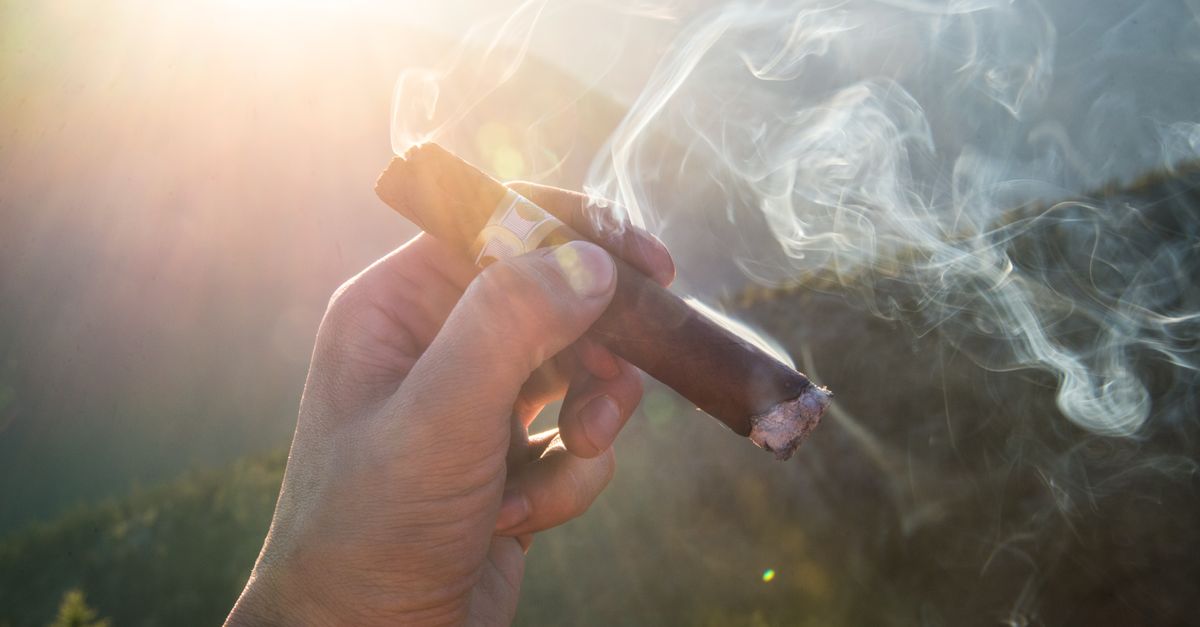
Yes, cigars contain nicotine. In fact, a single cigar often contains substantially more total nicotine than a cigarette. That's because cigars are larger and made with aged, fermented tobacco. Since nicotine occurs naturally in the tobacco plant, every tobacco product contains some amount of it. And even if you don't inhale cigar smoke, your body can still absorb nicotine through the lining of your mouth.
This guide breaks down how much nicotine cigars contain, how your body absorbs it, and what terms like "mild" and "full" really mean when it comes to strength.
Do cigars have nicotine even if you don't inhale?
Yes, cigars have nicotine that your body absorbs even if you do not inhale. Cigar smoke is more alkaline than cigarette smoke, which lets nicotine pass through the lining of your mouth, called the oral mucosa. This means you take in nicotine without ever sending smoke to your lungs.
This is a key reason cigars are not inhaled. The body does not need lung absorption to feel nicotine's effect. The mouth and throat do the work instead. If you are unsure how cigar smoking works, our guide on whether you inhale cigars explains the difference.
How much nicotine is in a cigar?
A cigar can hold far more total nicotine than a cigarette, mostly because of its size and tobacco. A cigarette is small and burns quickly. A large cigar holds many times more tobacco and can be smoked for an hour or more, so the total nicotine it contains is much higher.
The exact amount varies a great deal from cigar to cigar. Three main factors drive it:
- Size: A bigger cigar holds more tobacco, and more tobacco means more total nicotine.
- Tobacco type: Cigars use aged, fermented tobacco, which tends to be rich and potent.
- Blend and origin: Different leaves and growing regions carry different natural nicotine levels.
Because of these variables, there is no single nicotine figure for "a cigar." It is best understood in relative terms, not exact numbers.
What do mild, medium, and full mean for nicotine?
Mild, medium, and full describe a cigar's perceived strength, not a precise nicotine measurement. These labels tell you how powerful a cigar feels to smoke. A "full" cigar feels stronger and more intense, while a "mild" one feels gentler and smoother.
It is important to understand what these terms do not mean. They are not lab measurements of nicotine in milligrams. They reflect a blend of strength, body, and flavor as judged by the maker. A few factors shape this perceived strength:
- Wrapper and body: Darker, oilier wrappers often feel stronger and bolder.
- Blend: The mix of leaves changes how intense the cigar feels.
- Size and length: A longer smoke can build up strength over time.
So a "full" cigar may feel powerful, but the label is about experience, not a guaranteed nicotine count. Treat these terms as a rough guide to intensity.
A note on health risk
Nicotine is addictive, and cigars carry real health risks. The nicotine in cigars can lead to dependence, just as it does in other tobacco products. Health authorities such as the CDC and the American Cancer Society note that cigar use is linked to cancers of the mouth, throat, and esophagus, along with other serious effects, whether or not the smoke is inhaled. There is no risk-free level of tobacco use. If you have concerns about nicotine or your health, speak with a doctor.
How long does a cigar's nicotine buzz (or "cigar sickness") last?
The lightheaded, slightly nauseous feeling some smokers get from a cigar — sometimes called a nicotine buzz or "cigar sickness" — typically peaks within the first 15 to 30 minutes and fades within one to two hours after finishing the cigar. It comes on faster and stronger in new or infrequent smokers, because regular tobacco users build up tolerance to nicotine's effects over time. The National Cancer Institute notes that nicotine reaches the brain within seconds of absorption regardless of the tobacco product, which is why the buzz can feel sudden even though cigar smoke isn't inhaled into the lungs.
The feeling is your body's response to a large, fast dose of nicotine — a stimulant that also triggers a brief drop in blood sugar and blood pressure in people not used to it. Common symptoms include lightheadedness, a mild head rush, nausea, cold sweats, or a queasy stomach. It is unpleasant but not typically dangerous for a healthy adult; it passes on its own as the nicotine clears. The most reliable ways to shorten it: stop smoking the cigar, sit or lie down, sip water, and eat something — cigar sickness hits harder on an empty stomach. Smoking slowly (see our guide on how to smoke a cigar) and choosing a milder cigar are the best ways to avoid it in the first place. If symptoms are severe, don't pass with rest, or you have chest pain or shortness of breath, treat that as a medical concern and seek care rather than assuming it's ordinary cigar sickness.
Nicotine-free cigars: what they actually are
Nicotine-free cigars are a real product category, but the label is often misleading. True nicotine-free cigars exist and use herbal tobacco substitutes — usually a blend of dried plants like tea leaves, mullein, coltsfoot, or marshmallow root. They're not made from tobacco at all.
The most common non-tobacco "cigars" are marketed for meditation, theatrical use, or by people quitting nicotine. Brands like Honeyrose and Ecstacy Herbal Products make herbal cigarettes and cigars sold in some U.S. tobacco shops and online. The taste is not comparable to a real cigar — expect a smoky, vegetal, sometimes soapy character that has no tobacco richness.
Herbal cigars are NOT harmless. Any combusted plant material produces carbon monoxide, tar, and carcinogens. The absence of nicotine removes the addictive element but not the smoke-inhalation risk. If your goal is nicotine reduction, quit smoking entirely rather than substituting.
"Low-nicotine" tobacco cigars are a separate category — real tobacco cigars from producers who claim lower absorption. Most of these claims are unverified. A traditional premium cigar delivers roughly the same nicotine to your bloodstream as a couple of cigarettes over a 60-90 minute smoke, but because you're not inhaling, the systemic dose is lower than it looks. For the full picture, see our explainer on whether you inhale cigars.
How Cigars, Cigarettes, Vapes, and Nicotine Pouches Deliver Nicotine Differently
Cigars, cigarettes, vapes, and nicotine pouches each move nicotine into your bloodstream by a different route, and that route decides how fast and how hard the dose hits. Route matters more than the raw amount of nicotine sitting in the product.
A cigarette sends nicotine straight into the lungs, where a huge surface area pulls it into the blood within seconds. Manufacturer-reported cigarette yields tracked by the Centers for Disease Control and Prevention have sat just under 1 milligram per stick in recent years, though the figure varies by brand — see our nicotine yields by cigarette brand breakdown for how specific brands compared in the government's last full test, or our broader cigarette brands guide for how those brands differ beyond nicotine yield. The unburned tobacco in that same cigarette actually holds several times more nicotine than that. Combustion and unburned residue account for the rest.
A cigar works differently because of how the tobacco is made. Long fermentation gives cigar smoke a more alkaline pH than cigarette smoke. At that pH, more of the nicotine takes a form the lining of the mouth can absorb directly. This is the mechanism behind classic research on oral mucosa absorption. That route delivers a slower rise and a lower peak blood level than lung absorption. It still moves enough nicotine to sustain a real addiction.
Vapes inhale like a cigarette, so the mechanism is the lungs again. The CDC's own overview describes vape aerosol as routinely containing nicotine. Concentration swings widely by device and e-liquid strength, so two vapes can deliver very different doses per puff, even though both work through the same fast, lung-based route.
Nicotine pouches skip smoke entirely. You place one between your lip and gum, and nicotine crosses the same oral mucosa a cigar uses, just from a powder instead of smoke. Most pouches sold between 2019 and 2022 carried 6 milligrams of nicotine or less, per CDC tracking. Eight-milligram products gained share fast in that same window, and the FDA has since authorized versions running 9 to 11 milligrams per pouch.
Put side by side, cigarettes and vapes trade a fast, high peak for a smaller total dose. Cigars and pouches trade a slower, lower peak for a dose that can add up to more over the length of a smoke, especially with a large cigar's much bigger total tobacco load.
Nicotine Content by Cigar Type and Brand
Nicotine content in a cigar tracks the tobacco blend and the size of the cigar far more closely than the brand printed on the band. A federal survey of cigarette and cigar filler by the Centers for Disease Control and Prevention measured these average nicotine concentrations:
- Cigarettes: 19.2 milligrams per gram
- Large cigars: 15.4 milligrams per gram
- Pipe tobacco cigars: 8.79 milligrams per gram
A large cigar can run 5 to 20 grams of tobacco depending on ring gauge and length. Multiply that weight by the filler concentration above and a large cigar's leaf works out to somewhere around 75 to 300-plus milligrams of nicotine. An unlit cigarette, by comparison, holds roughly 10 to 14 milligrams of total nicotine.
Smaller formats vary just as widely, and different studies don't fully agree on the numbers. Research compiled by the public-health nonprofit Truth Initiative puts the range at:
- Cigarillos: 4.84 to 12.0 milligrams per gram
- Little cigars: 10.3 to 19.1 milligrams per gram
- Large cigars: as high as 6.76 to 28.6 milligrams per gram
Sampling methods and the specific products tested differ from study to study, which is why these ranges don't match the CDC figures above exactly. Treat any single number here as a rough order of magnitude. None of them is a lab result for the specific pack you bought.
A darker maduro wrapper does not mean a stronger cigar. That color comes from a longer fermentation under more heat and humidity, which builds sugar and thickens the leaf, according to a National Academies of Sciences, Engineering, and Medicine review of premium cigar characteristics. The same review traces a cigar's actual strength mainly to the ligero leaf in the filler blend. Wrapper color plays a much smaller part. A light, mild-looking natural wrapper can sit over a ligero-heavy filler that smokes fuller than a maduro built on milder leaf.
Within premium brands, the specific line decides strength more than the brand name does. Padrón, Oliva, Rocky Patel, and Romeo y Julieta each sell a spread from milder Connecticut-wrapped lines to fuller maduro or ligero-forward lines under the same brand. Check the specific line before you judge strength. The brand name on the box doesn't tell you that by itself.
Mass-market, machine-made cigarillos and small cigars sit in a different category. Backwoods, Black & Mild, Dutch Masters, Swisher Sweets, and White Owl don't publish a per-stick nicotine figure. Neither the FDA nor any cigar maker has to print one the way food packaging lists calories.
Truth Initiative's research flags a real difference in how these products actually get smoked, too. Younger Black & Mild users commonly inhale the smoke, unlike typical premium cigar smokers. That single habit changes how much of the nicotine reaches the lungs instead of stopping at the mouth. A flavored cigarillo smoked like a cigarette delivers nicotine more like a cigarette does, whatever the per-gram tobacco figures say on their own.
FAQ
Is there nicotine in cigars?
Yes, there is nicotine in cigars. Nicotine occurs naturally in the tobacco plant, so every cigar contains it. A single cigar often holds more total nicotine than a cigarette because it is larger and uses aged, fermented tobacco.
Does a cigar have more nicotine than a cigarette?
A cigar often has more total nicotine than a cigarette because it is much larger and burns longer. The exact difference depends on the cigar's size, tobacco, and blend. Even without inhaling, your body absorbs nicotine through the mouth.
How much nicotine is in a cigar?
The amount of nicotine in a cigar varies widely and cannot be given as one figure. It depends on the cigar's size, tobacco type, and blend. Larger cigars made from potent tobacco contain more total nicotine than smaller, milder ones.
Does a mild cigar have less nicotine?
Not necessarily. "Mild" describes a cigar's perceived strength and flavor, not a measured nicotine amount. A cigar labeled mild may still deliver meaningful nicotine, so the term is a rough guide to intensity rather than a precise measurement.
Does the cigar wrapper contain nicotine?
Yes. Nicotine occurs throughout the tobacco leaf, not concentrated in one part of the cigar, so the wrapper contains nicotine just as the filler and binder do. By weight, the wrapper makes up only a small fraction of a cigar's total tobacco — most of the leaf is packed inside as filler and binder — so it contributes proportionally less to the cigar's overall nicotine than that larger inner portion. Still, the wrapper is not nicotine-free, and wrapper leaf type and curing can influence flavor and perceived strength.
How much nicotine is in a cigar if you don't inhale?
Skipping the inhale doesn't lower how much nicotine sits in the tobacco. It only changes how much of it reaches you and by which route. A cigar's leaf can hold anywhere from roughly 75 to 300-plus milligrams of nicotine in a large size, based on CDC filler measurements of about 15.4 milligrams per gram. None of that nicotine travels to your lungs if you never inhale. What you actually take in crosses through the lining of your mouth instead, over the whole length of the smoke. It arrives at a slower rate and a lower peak than a cigarette delivers to the lungs.
Do you get nicotine in your system from a cigar you don't inhale?
Yes. Cigar smoke sits at a more alkaline pH than cigarette smoke, and at that pH, more of the nicotine takes a form the oral mucosa can absorb on contact. A National Academies of Sciences, Engineering, and Medicine review of cigar chemistry describes this unprotonated form as readily absorbed through the mouth rather than the lungs. Nicotine picked up this way still reaches the brain and the rest of the bloodstream. It just arrives slower and at a lower peak than nicotine pulled into the lungs.
Does cigar smoke have tar?
Yes. Cigar smoke forms tar and carcinogens through the same combustion process as cigarette smoke, so it carries them whether or not you inhale. A National Academies review of premium cigar health effects lists nitrosamines, polycyclic aromatic hydrocarbons, and formaldehyde among the hazardous compounds in cigar smoke. Holding that smoke in the mouth and throat, common among cigar smokers, exposes those tissues to the same toxicants a cigarette smoker's lungs would take in.
Is cigar tobacco different from cigarette tobacco?
Yes. Cigar filler, binder, and wrapper leaf are air-cured and fermented, often for months. Cigarette tobacco is typically a blend of flue-cured, air-cured, and sun-cured leaf on a much shorter timeline. The National Academies' review of cigar characteristics ties that longer fermentation to cigar smoke's higher, more alkaline pH. That pH difference is the same chemistry behind a cigar delivering nicotine through the mouth instead of the lungs.
Conclusion
Do cigars have nicotine? Yes — every cigar contains nicotine, and a single cigar often holds more total nicotine than a cigarette because of its larger size and aged, fermented tobacco. Your body absorbs this nicotine through the lining of your mouth even when you do not inhale. Terms like mild, medium, and full describe perceived strength, not exact nicotine counts, so use them as a general guide. Remember that nicotine is addictive and cigars carry health risks, which you can read more about in our overview of whether cigars are bad for you and how cigar smoke works when you do not inhale. If cigarette-specific questions brought you here, our cigarette smoking FAQ covers those separately.