How to Store Cigars
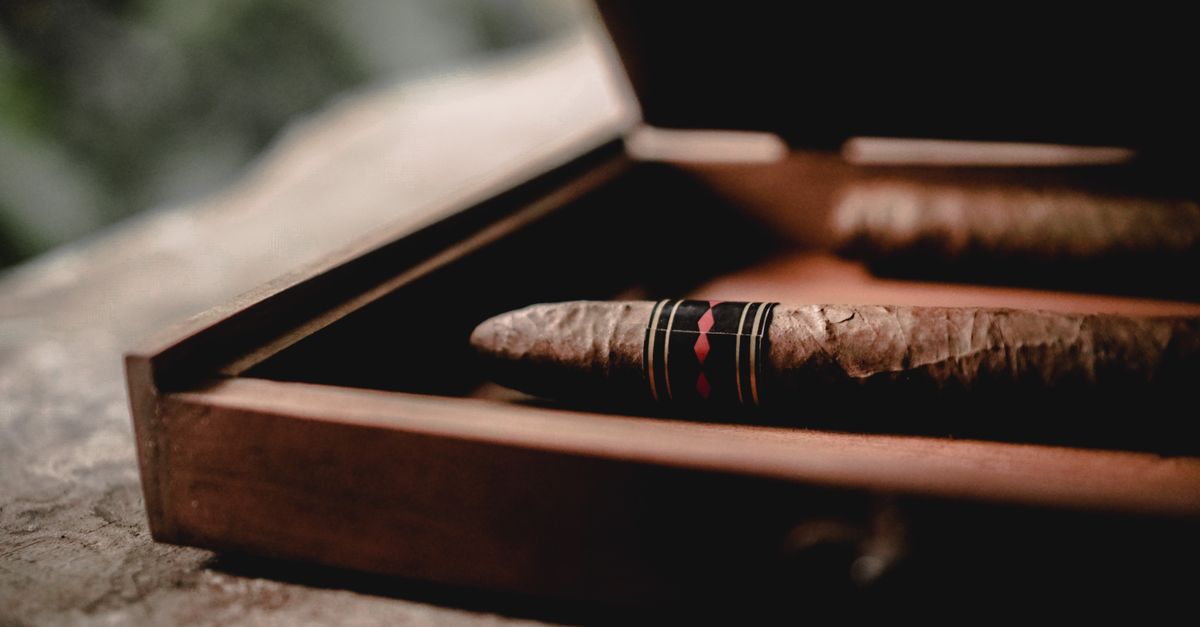
The key to keeping cigars fresh is maintaining 65 to 70% relative humidity at around 70°F, similar to the conditions in which they were rolled and aged. This is the basis of the "70/70 rule." At that balance, cigars stay supple, burn evenly, and retain their flavor for years. Leave one exposed to open air, though, and it can dry out and turn harsh within days.
This guide walks through the best ways to store cigars at home, from a proper humidor to quick, temporary solutions, so you can find an option that works for your collection and budget.
Our Top Picks
How we pick: we weigh quality, real-world performance, and value across strengths and budgets — and only list what we’d actually buy. Buying through our links may earn us a commission at no extra cost to you.
The best balance of price, build, and capacity for a first humidor. Solid cedar, a tight seal, and a glass top that keeps you from opening it constantly — season it, add a Boveda pack, and it just works.
Check price on Amazon →- Best Overall
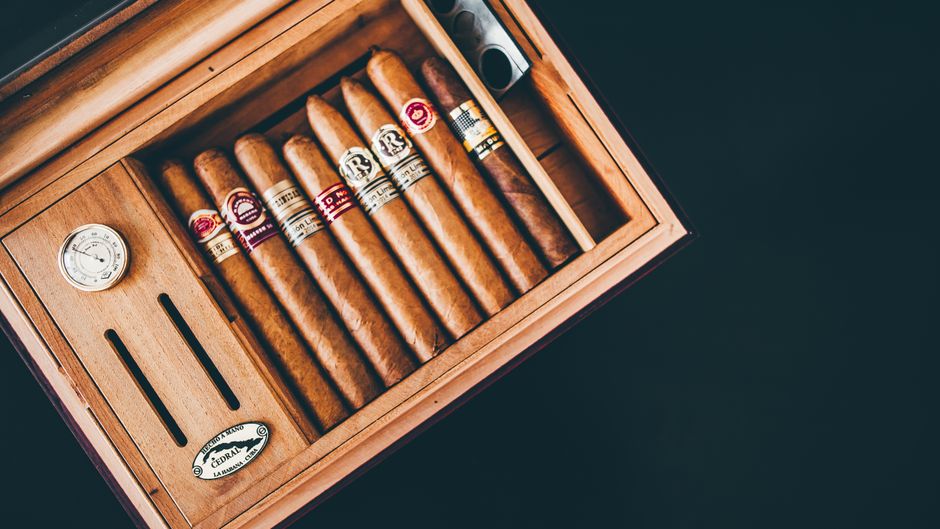
Mantello Glass Top Cigar Humidor (25–50 ct)
Most home collections — the safe first humidor.
The best balance of price, build, and capacity for a first humidor. Solid cedar, a tight seal, and a glass top that keeps you from opening it constantly — season it, add a Boveda pack, and it just works.
Check price on Amazon →- Genuine Spanish cedar lining that buffers humidity
- Glass top lets you check cigars without opening it
- Comes with a humidifier and hygrometer to start
- Included analog hygrometer should be upgraded
- Real capacity closer to 25 than 50
- Best Budget
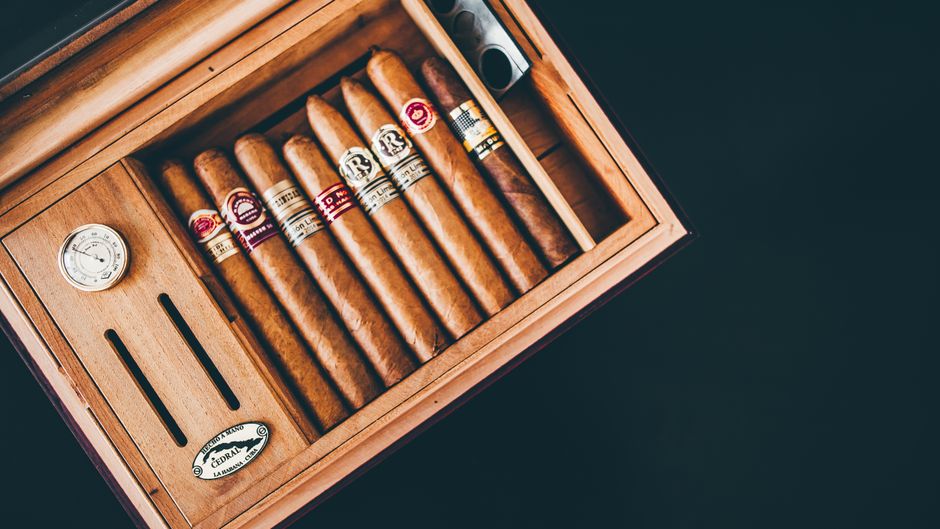
Case Elegance Glass Top Humidor Jar (18 ct)
Beginners testing the hobby without committing.
The cheapest way to store cigars properly. A glass jar with a real gasket seal plus one humidity pack will keep a dozen cigars perfect — and you can graduate to a desktop box later.
Check price on Amazon →- Excellent airtight seal for the price
- Holds humidity better than many cheap boxes
- Takes up almost no space
- No cedar tray (less humidity buffering)
- Small — fine for 15, not a collection
- Best Upgrade
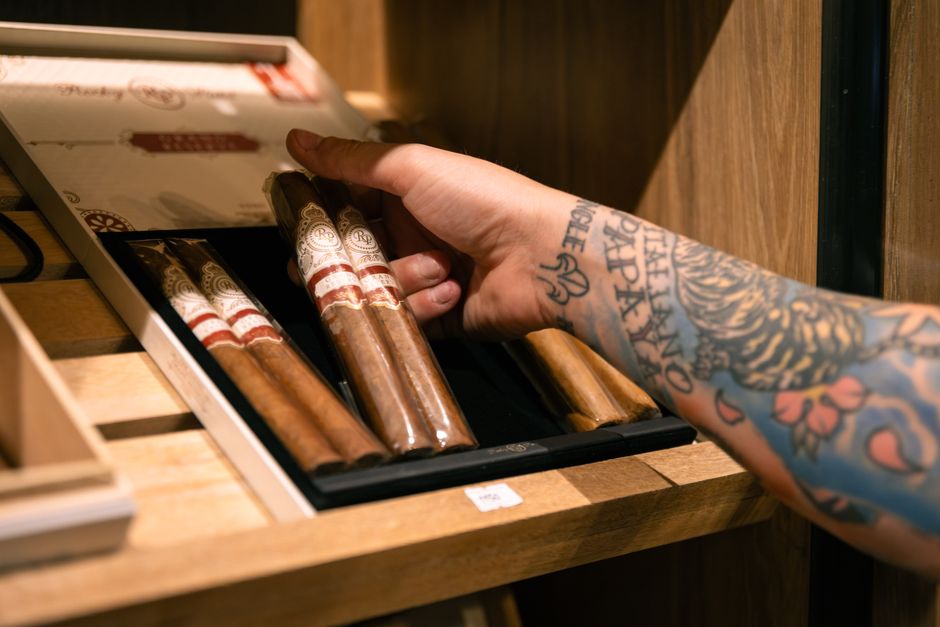
Whynter CHC-251S Electric Cigar Cooler Humidor (400 ct)
Larger collections or hot, dry climates.
When your collection outgrows a box, this is the upgrade. Active cooling keeps cigars below the 70°F beetle-risk line — essential if you live somewhere warm and your stash is worth protecting.
Check price on Amazon →- Active temperature control (beats beetles + swings)
- Spanish cedar shelves and trays
- Holds hundreds of cigars
- Big jump in price
- Still needs humidity packs to dial RH
- Best for Travel
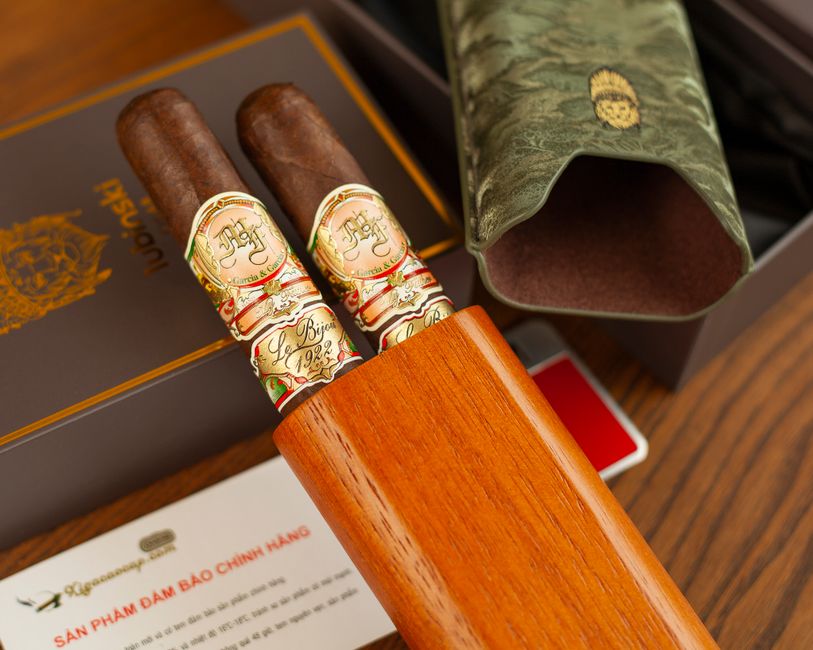
XIKAR Travel Humidor Case (5 ct)
Protecting a few cigars on trips.
The case to throw a few cigars in for a golf trip, wedding, or flight. Crushproof, watertight, and with a humidity pack inside it holds 65–70% for days on the road.
Check price on Amazon →- Crushproof and waterproof
- Holds humidity for days with one pack
- Lifetime-warranty build
- Only 5 cigars
- Overkill for at-home storage
| Pick | Best for | Price | |
|---|---|---|---|
| Best OverallMantello Glass Top Cigar Humidor (25–50 ct) | Most home collections — the safe first humidor. | $70 | Check price → |
| Best BudgetCase Elegance Glass Top Humidor Jar (18 ct) | Beginners testing the hobby without committing. | $35 | Check price → |
| Best UpgradeWhynter CHC-251S Electric Cigar Cooler Humidor (400 ct) | Larger collections or hot, dry climates. | $370 | Check price → |
| Best for TravelXIKAR Travel Humidor Case (5 ct) | Protecting a few cigars on trips. | $45 | Check price → |
Prices are indicative and change often — tap through for the live price on Amazon.
How to keep cigars fresh: the 70/70 rule
Hold cigars at 65–70% relative humidity and a temperature near 70°F (21°C). At that balance the wrapper stays elastic, the oils that carry flavor stay intact, and the cigar burns the way its maker intended.
The traditional "70/70" target — 70% humidity at 70°F — is easy to remember and it works. Many seasoned smokers now prefer something a bit drier, around 62–67%, for a few practical reasons. A firmer cigar burns more evenly and is less prone to a soft, plugged draw. Lower humidity also cuts mold risk, which becomes real above roughly 75%. Thick wrappers like Maduros are often said to smoke better closer to 65%.
There's no single perfect number. Anywhere in the 65–70% band is safe, so pick a point and keep it stable. See our full cigar humidity guide for how temperature and humidity interact.
How to store cigars in a humidor (step by step)
A seasoned humidor is the gold standard for cigar storage — a sealed box, usually lined with Spanish cedar, that holds a steady 65–70%. Before you put a single cigar inside, you have to season it; skip that step and the dry wood will pull moisture out of your cigars faster than any pack can replace it.
Follow these steps to set up a new humidor:
- Calibrate your hygrometer. Confirm it reads accurately before you trust it. An uncalibrated gauge can be off by 5–10%, which means you're flying blind.
- Season the cedar. Place a humidity source inside — an 84% Boveda seasoning pack is the easiest option — and close the lid.
- Wait. Let the humidor sit 3–7 days. The cedar slowly absorbs moisture until the interior holds steady.
- Swap to a storage pack. Once humidity stabilizes, swap the seasoning pack for a 69% or 65% maintenance pack.
- Add your cigars. Load them in and give them a few days to acclimate before you smoke.
You can speed things up by wiping the cedar with a barely damp cloth, but never soak the wood or let cigars touch standing water. See our picks for the best cigar humidors if you're buying your first one, and our humidor accessories & supplies guide for the packs, hygrometer, and seasoning kit that keep it running.
How to store cigars without a humidor
No humidor? You don't need one right away. A sealed container and a humidity pack gets you most of the way there.
The two most popular DIY options are the tupperdor — an airtight Tupperware container with a humidity pack dropped inside — and the coolerdor, which is a clean cooler with several packs. Both seal well, and a coolerdor's thick walls make it surprisingly good for large collections. Neither is a compromise; plenty of serious collectors store thousands of cigars in them. Wondering how they stack up against a traditional humidor? See our tupperdor vs humidor comparison for a direct cost-and-capability breakdown.
A glass mason jar works on the same principle as a tupperdor, pairing an airtight container with a properly sized humidity pack to keep relative humidity stable. A quart-sized jar typically fits two to four cigars depending on ring gauge, making it best for a tiny stash or temporary storage. Because sealed glass traps moisture tightly with little air volume to buffer swings, check the cigars regularly so they do not get spongy from excess humidity.
Cigars sold in metal or glass tubes need the same attention, since a tube is rarely airtight on its own. A tube slows moisture loss for a few days, but long-term storage requires a humidor or jar. Take off or loosen the cap when placing a tubed cigar into storage so humidified air can reach the wrapper.
When you have nothing — no pack, no box — your options are temporary at best. A zip bag with a Boveda pack buys you two to four weeks. A zip bag alone slows moisture loss for about a week. The cellophane sleeve a cigar ships in helps for a few hours, not days. These slow drying; they can't replace what's already lost.
For a deeper look at how long each method holds, see how long do cigars last.
Why the fridge ruins cigars
Don't put cigars in the fridge. A refrigerator runs at 30–40% humidity — less than half what cigars need — and it pulls moisture out fast, cracking the wrapper and stripping flavor. Cigars also absorb odors, and food smells from a fridge will permanently taint the tobacco. Opening and closing the door adds temperature cycling on top of all that.
The one exception is using a freezer to kill a tobacco-beetle infestation, which is a careful, deliberate process with precise thaw times — not something you do casually. For everyday storage, room temperature in a sealed, humidity-controlled container is always the answer.
Cigar storage methods compared
| Method | How it works | Effort | Longevity |
|---|---|---|---|
| Seasoned humidor | Cedar box + maintenance pack at 65–70% | Medium setup, low upkeep | Years (can improve) |
| Tupperdor | Airtight container + Boveda pack | Low | Months to years |
| Coolerdor | Cooler + several packs | Low | Months to years |
| Zip bag + Boveda | Sealed bag + one pack | Very low | 2–4 weeks |
| Zip bag alone | Sealed bag, no pack | Very low | ~1 week |
| Cellophane only | Factory sleeve | None | A day or two |
The closer a method holds 65–70% humidity, the longer your cigars stay fresh. Everything else is a tradeoff between cost and convenience. If a cigar develops a white, dusty coating after time in storage, don't assume the worst before checking our plume-vs-mold identification guide — the two look similar but one is harmless and the other means the cigar is done.
How to store a used or partially smoked cigar
You had time for half a cigar. Now what? The honest answer to how to store a used cigar is: usually, you don't. A partially-smoked cigar loses most of its character within hours, and the residual tars in the leaf make relighting harsh. Two exceptions and one workable approach.
The exceptions where saving works:
- You're relighting within the next hour. The cigar hasn't cooled enough for the oils to turn. Let it go out on its own (don't stub it), then relight after a hard blow through the head to clear stale smoke.
- You're saving the ashy foot to smoke the top half tomorrow. Fresh cut the burnt end off cleanly with a sharp guillotine after the cigar has cooled. Store the cut cigar in the humidor overnight. The next day, retoast and light as a fresh smoke. This works better than trying to relight the actual half-smoked stick.
Cigar storage tips for partial cigars: Never store a lit or recently-lit cigar in a humidor with fresh cigars — the residual smoke will taint the whole box. A cigar storage fridge or standalone Tupperware with Boveda works for the same-day save. Never store a partial cigar in a plastic bag with air; the tars intensify.
The best practice is simply to pick a shorter format when you know your time is limited. See our cigar sizes guide for what fits in a 30-minute window — a Corona or Robusto Corona is often the right choice over a Toro when you know you can't sit for 90 minutes.
FAQ
How do you keep cigars fresh at home?
Store them at 65–70% humidity and around 70°F. The easiest route is a seasoned humidor with a hygrometer and a humidity pack. A sealed Tupperware container with a Boveda pack works well for smaller collections and costs almost nothing.
How do you store cigars without a humidor?
Use a tupperdor — an airtight container with a Boveda humidity pack — or a coolerdor for larger collections. Both seal in moisture nearly as well as a real humidor at a fraction of the cost. They're not a beginner shortcut; they're a legitimate storage method.
Can you store cigars in Tupperware?
Yes, and it works well. An airtight Tupperware container plus a humidity pack makes a tupperdor that holds 65–70% reliably. It's one of the cheapest and most practical ways to store cigars without buying a traditional humidor.
How long can cigars stay fresh in storage?
In a properly humidified humidor or tupperdor, years — and many premium cigars improve with age. In a zip bag with a Boveda pack, two to four weeks. With no humidity source at all, only a few days before you'll notice it in the smoke. See how to age cigars for how to actually rest a full-bodied blend for months or years instead of just storing it short-term.
Should you keep cigars in the refrigerator?
No. Cold, dry, and full of food odors — the fridge hits all three problems at once. Keep cigars at room temperature in a sealed, humidity-controlled container.
Should you remove the cellophane sleeve before putting a cigar in a humidor?
Yes. The cellophane blocks humidity exchange between the humidor's air and the cigar, so a sleeved cigar won't season or humidify properly. Some smokers leave inexpensive machine-made cigars sleeved for short-term storage, but for anything meant to rest and improve, take the sleeve off first.
Can cigars touch each other in a humidor?
Yes — cigars can touch, lean against each other, or be stacked without harm, and doing so is normal for most collections. What matters is airflow, not personal space: don't pack a humidor so tightly that air can't circulate, since a solidly-packed box can trap moisture unevenly and slow how quickly newly added cigars acclimate. Leave a little room for air to move around the stack, especially once a humidor is close to full.
Do Cuban, Cohiba, or other premium cigars need different storage?
No. Every premium cigar — Cuban, Cohiba, Montecristo, Romeo y Julieta, or any other brand — wants the same 65–70% humidity and ~70°F. Brand and origin don't change the target; a well-tuned humidor or tupperdor holds any of them equally well.
Can you store cigars without Boveda packs?
Yes. Boveda is the most common choice because it's a one-step, self-regulating pack, but it's not the only option. A traditional propylene glycol solution and floral foam, silica gel beads rated for cigar humidity, or an Integra Boost pack all hold 65–70% reliably. Whatever you use, check it periodically with a calibrated hygrometer rather than assuming it's still active.
Should cigars be unwrapped (cellophane removed) in a humidor?
Yes, in most cases. Cellophane blocks humidity exchange, so a wrapped cigar won't season or age at the same rate as the rest of your humidor. Remove the sleeve for anything you plan to store for more than a few weeks. The main exception is cigars you intend to gift or travel with soon, where the sleeve protects the wrapper from handling damage more than it costs you in humidification.
Do machine-made cigars like Backwoods or dry-cured cigars like Toscano need a humidor?
Backwoods cigarillos and Italian dry-cured cigars like Toscano do not need humidor storage. Manufacturers fire-cure or dry-cure the tobacco to remove most moisture, leaving the finished sticks shelf-stable at room temperature without the standard 65 to 70 percent relative humidity (RH) target.
Toscano confirms its fire-cured Kentucky tobacco cigars can rest at room temperature for years, though smokers who prefer a softer draw can store them near 65 percent RH. This curing difference explains why dry-cured sticks stay stable on a shelf, whereas premium hand-rolled cigars rely on humidified leaf and require constant humidor care.
Where do you store cigars while a new humidor is being seasoned?
Store cigars in an airtight container or a zip bag with a Boveda pack. A zip bag with a Boveda pack protects cigars for two to four weeks, which is about how long the seasoning steps for a new humidor take to finish.
How do you keep cigars cool in summer or in a hot room?
Move your humidor to the coolest, most stable spot available, such as an interior closet or basement away from sunny windows and exterior walls. Sustained heat above roughly 74°F can wake destructive tobacco beetles and trigger sharp humidity swings, as detailed in our cigar humidity guide. If your room regularly exceeds the target 65 to 70°F range during summer, a climate-controlled model from our best cigar humidors guide holds that temperature far more reliably than a passive box.
Where's the best place in the house to keep a humidor?
Keep it away from direct sunlight, heat vents, and exterior walls. See the full room-placement guidance in our best cigar humidors guide.
Conclusion
It all comes down to one rule: hold cigars at 65–70% humidity and around 70°F. A seasoned humidor does it best, but a tupperdor or coolerdor with a Boveda pack gets you 95% of the way there for far less money. Whatever you choose, use a hygrometer so you're measuring, not guessing — and never use the fridge. The Humidor Tracker can remind you before your packs run dry and log how long each cigar has been resting. The same Boveda humidity system also works for cannabis storage — see Boveda for weed for the right RH target if that applies to you.