Ideal Cigar Humidity Guide
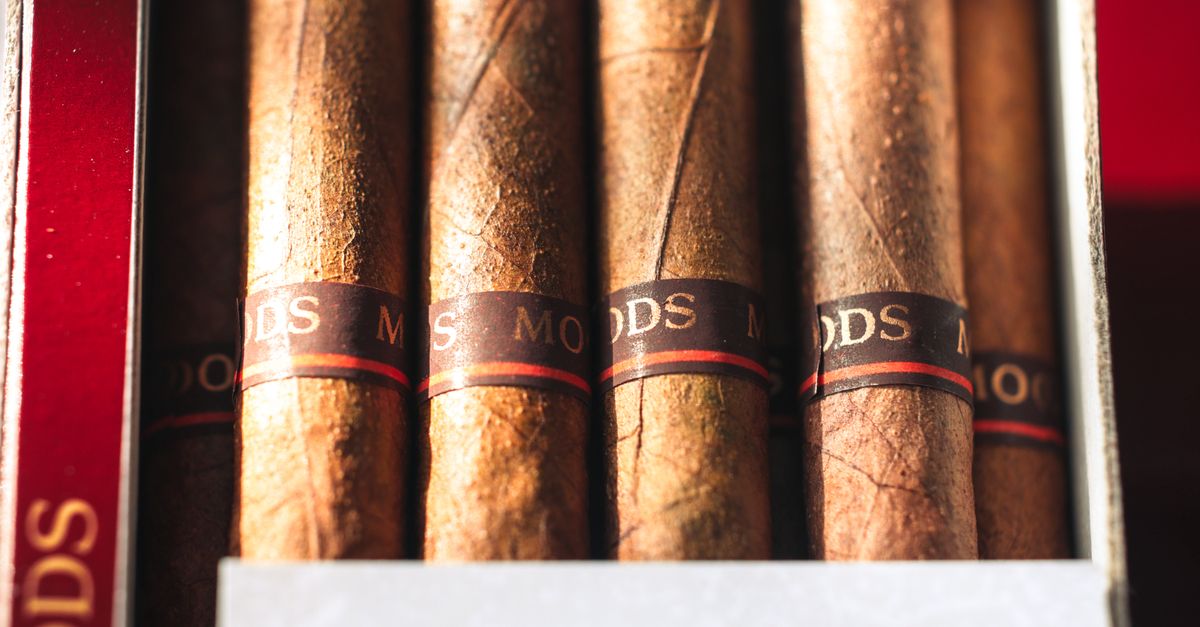
The sweet spot for storing cigars is 65 to 70% relative humidity (RH). In that range, wrappers stay supple, tobacco oils remain intact, and cigars burn as their makers intended. If conditions are too dry, cigars can crack and taste harsh. Too humid, and you risk a plugged draw, or mold once humidity rises above 75%.
The easiest way to stay in that range is with two-way humidity control packs. This guide covers the ideal target, what happens when humidity drifts too high or low, and the tools that make managing it simple.
Our Top Picks
How we pick: we weigh quality, real-world performance, and value across strengths and budgets — and only list what we’d actually buy. Buying through our links may earn us a commission at no extra cost to you.
The best balance of price, build, and capacity for a first humidor. Solid cedar, a tight seal, and a glass top that keeps you from opening it constantly — season it, add a Boveda pack, and it just works.
Check price on Amazon →- Best Overall
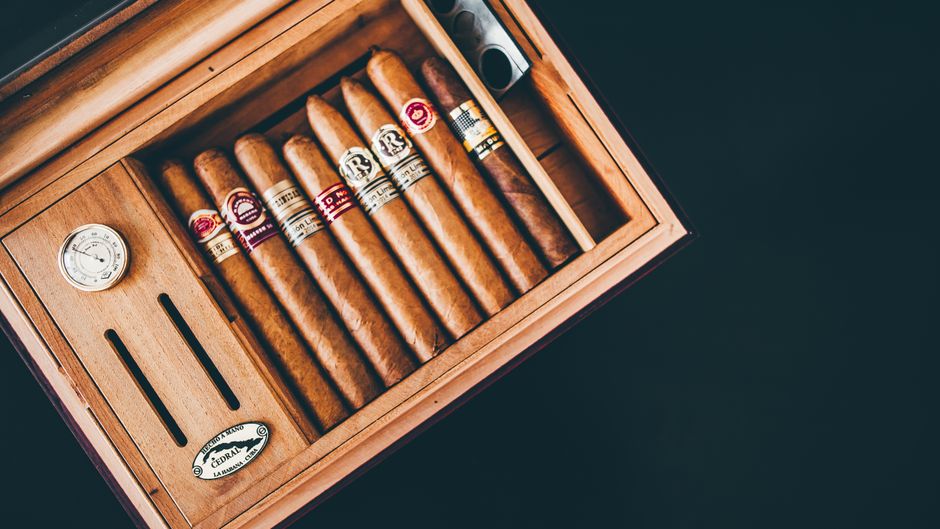
Mantello Glass Top Cigar Humidor (25–50 ct)
Most home collections — the safe first humidor.
The best balance of price, build, and capacity for a first humidor. Solid cedar, a tight seal, and a glass top that keeps you from opening it constantly — season it, add a Boveda pack, and it just works.
Check price on Amazon →- Genuine Spanish cedar lining that buffers humidity
- Glass top lets you check cigars without opening it
- Comes with a humidifier and hygrometer to start
- Included analog hygrometer should be upgraded
- Real capacity closer to 25 than 50
- Best Budget
Case Elegance Glass Top Humidor Jar (18 ct)
Beginners testing the hobby without committing.
The cheapest way to store cigars properly. A glass jar with a real gasket seal plus one humidity pack will keep a dozen cigars perfect — and you can graduate to a desktop box later.
Check price on Amazon →- Excellent airtight seal for the price
- Holds humidity better than many cheap boxes
- Takes up almost no space
- No cedar tray (less humidity buffering)
- Small — fine for 15, not a collection
- Best Upgrade
Whynter CHC-251S Electric Cigar Cooler Humidor (400 ct)
Larger collections or hot, dry climates.
When your collection outgrows a box, this is the upgrade. Active cooling keeps cigars below the 70°F beetle-risk line — essential if you live somewhere warm and your stash is worth protecting.
Check price on Amazon →- Active temperature control (beats beetles + swings)
- Spanish cedar shelves and trays
- Holds hundreds of cigars
- Big jump in price
- Still needs humidity packs to dial RH
- Best for Travel
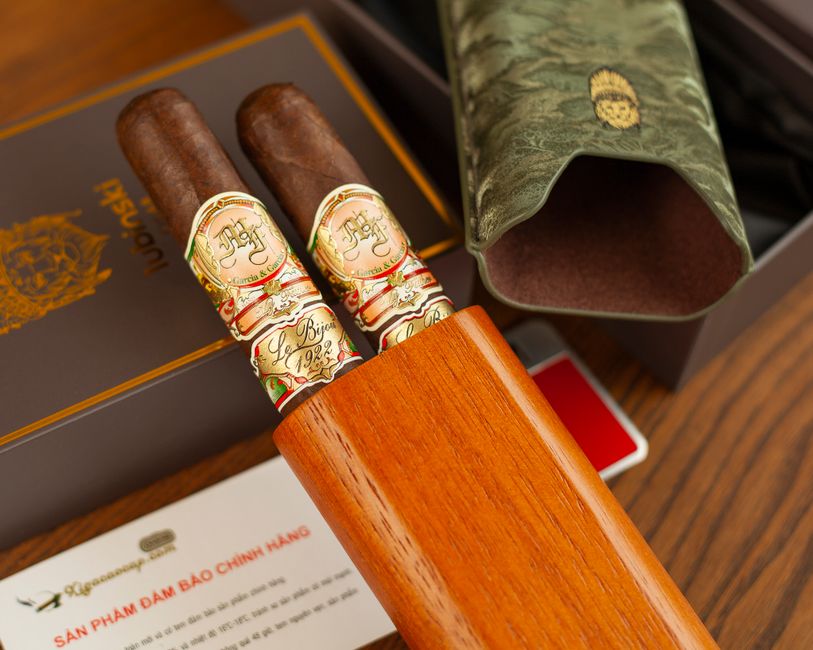
XIKAR Travel Humidor Case (5 ct)
Protecting a few cigars on trips.
The case to throw a few cigars in for a golf trip, wedding, or flight. Crushproof, watertight, and with a humidity pack inside it holds 65–70% for days on the road.
Check price on Amazon →- Crushproof and waterproof
- Holds humidity for days with one pack
- Lifetime-warranty build
- Only 5 cigars
- Overkill for at-home storage
| Pick | Best for | Price | |
|---|---|---|---|
| Best OverallMantello Glass Top Cigar Humidor (25–50 ct) | Most home collections — the safe first humidor. | $70 | Check price → |
| Best BudgetCase Elegance Glass Top Humidor Jar (18 ct) | Beginners testing the hobby without committing. | $35 | Check price → |
| Best UpgradeWhynter CHC-251S Electric Cigar Cooler Humidor (400 ct) | Larger collections or hot, dry climates. | $370 | Check price → |
| Best for TravelXIKAR Travel Humidor Case (5 ct) | Protecting a few cigars on trips. | $45 | Check price → |
Prices are indicative and change often — tap through for the live price on Amazon.
What humidity is best for cigars?
The best humidity for cigars is 65–70% RH. Most experienced smokers land somewhere in the middle — 65–68% — rather than pushing to the top of the range. There's no single "correct" number; it's a preference within a safe band.
Lower humidity (65–67%) produces a firmer cigar that burns crisply and is easier to draw. Higher humidity (68–70%) gives a softer, slower, richer smoke — but it can feel spongy and runs a slightly higher risk of draw issues. Below 62%, the cigar starts losing flavor over time. Above 72%, burn and draw both suffer, and mold becomes a real concern.
Pick a target in that 65–70% window, hold it steady, and adjust based on how your cigars actually smoke.
The 70/70 rule explained
The 70/70 rule means storing cigars at 70% relative humidity and 70°F (21°C). It's the classic beginner benchmark because it's easy to remember and it puts you squarely inside the safe range. Think of it as a starting point, not a law — plenty of experienced smokers drop the humidity to around 65% once they find that it improves the burn and lowers mold risk.
Both numbers work together. Humidity keeps the tobacco moist; temperature controls how fast moisture moves and whether pests or mold stay dormant. Hold both near 70 and you can't go far wrong. As you learn what you like, nudge the humidity down a few points if your cigars ever feel spongy or burn unevenly.
Why too dry or too wet is bad
Both extremes ruin a cigar — just in different ways. Too dry strips moisture and oils, so the cigar smokes hot, fast, and bitter, and the wrapper can crack or unravel. Too wet swells the tobacco, plugging the draw and, above roughly 75% RH, inviting mold. Mold means the cigar is gone; a dried-out cigar can sometimes be revived slowly, but it's a coin flip.
| Humidity (RH) | Effect on the cigar |
|---|---|
| Below 55% | Brittle wrapper, cracks, harsh and hot smoke |
| 55–62% | Noticeably dry; flavor and aroma fade |
| 65–70% | Ideal — supple, even burn, full flavor |
| 71–74% | Slightly damp; slower burn, occasional tight draw |
| 75% and up | Plugged draw, tunneling, real risk of mold |
Stay in the 65–70% band and you avoid both failure modes. That's the whole game.
How humidity control packs work
Two-way humidity control packs hold cigars at a fixed RH by both adding and absorbing moisture automatically. Each pack contains a salt-and-water solution calibrated to a target level — 65%, 69%, or 72% are the common choices. When the air is too dry, the pack releases moisture; when it's too damp, it pulls moisture back. No topping up with distilled water, no guesswork.
Pick your target level, drop in enough packs for your humidor's capacity (roughly one pack per 25 cigars), and check them every few months. When a pack hardens and loses its give, it's spent — replace it. These Boveda cigar humidity packs are the most common brand and work in humidors, travel cases, and zip-top bags alike.
Measuring humidity with a hygrometer
You can't control what you can't measure. A hygrometer reads the relative humidity inside your humidor so you can confirm you're actually in the 65–70% range — not just hoping the pack is doing its job. Without one, a humidor that feels fine can still be running too dry or too wet.
Digital hygrometers are more accurate than the cheap analog dials that ship with many entry-level humidors. Whichever you use, calibrate it first with a salt test so you know the reading is true. Our cigar hygrometers guide covers calibration and the best models. Check the reading every few days when your setup is new, then weekly once things are stable.
Temperature's role in cigar storage
Temperature targets about 65–70°F (18–21°C). Warmer air holds more moisture and speeds chemical changes in the tobacco; heat above roughly 74°F can wake tobacco beetles that will destroy a collection. Cold, dry spots like a refrigerator pull moisture out fast and should never substitute for a humidor.
Keep your humidor out of direct sun and away from heating vents. What you're protecting against is swings — rapid temperature changes drive humidity changes, which stress the wrapper. Stable room temperature is the goal. For the full storage routine, see how to store cigars.
Cigar Temperature and Humidity Quick-Reference Chart
Safe cigar storage requires balancing relative humidity against ambient room temperature to protect wrappers, burn consistency, and tobacco oils.
| Condition | Relative Humidity | Temperature Guidance | Effect |
|---|---|---|---|
| Dangerously dry | Below 55% | Never store in a refrigerator; cold, dry air pulls moisture out fast | Brittle wrapper, cracks, harsh and hot smoke |
| Under-humidified | 55% to 62% | Hold near the standard 65 to 70°F (18 to 21°C) target | Noticeably dry, flavor and aroma fade |
| Ideal | 65% to 70% | Target 65 to 70°F (18 to 21°C) | Supple wrapper, even burn, full flavor |
| Slightly damp | 71% to 74% | Keep storage below 74°F | Slower burn, occasional tight draw |
| Dangerously wet | 75% or higher | Heat above roughly 74°F can wake dormant tobacco beetles | Plugged draw, tunneling, real risk of mold |
How to age cigars long-term
Aging cigars is a deliberate, months-to-years-long process aimed at developing flavor — distinct from the day-to-day humidity maintenance covered above, which is simply about keeping a cigar smokable. Well-constructed cigars from age-worthy blends (Padrón, Fuente, Cuban marcas, and similar) mellow harsh notes, lose ammonia-like bite, and let their component tobaccos "marry" into a smoother, more complex smoke over time.
To age cigars properly:
- Start with a stable environment. Hold humidity in the 65–70% range and temperature near 65–68°F. Aging rewards conditions that barely move for months at a stretch — small, steady swings do more damage than a setpoint that's a point or two off but rock-solid.
- Keep cigars in their original box or wrapped in cedar. Cedar sheets, or the cigar's own cedar box, help humidity move evenly across the bunch and add a subtle aroma over time.
- Rotate periodically. Every few months, rotate boxes top to bottom and cigars within a box so every stick sees roughly the same conditions.
- Be patient. Meaningful aging takes at least six months to become noticeable, and one to five years for a real transformation. Serious collectors hold some cigars for decades.
The 60–62% "low-and-slow" debate
Not every collector ages cigars at the standard 65–70% window described above. A vocal minority intentionally stores aging cigars at a lower 60–62% RH, sometimes called "low-and-slow" storage — the idea being that slightly drier air slows the chemical reactions that drive aging, letting flavors develop more gradually and evenly with less mold risk over long timelines. Critics counter that dropping below 62% risks losing oils and flavor outright, especially in already-humid climates where a humidor can run drier than the hygrometer suggests.
The opposite camp — often smokers in humid regions like South Florida or Southeast Asia — deliberately holds the top of the range, 68–70%, reasoning that their local climate already pulls moisture out through door seals and cedar, so a higher setpoint compensates. Neither approach is objectively "right"; both work if held steady. If you're aging for the first time, start at the standard 65–70% window and only experiment with the lower 60–62% band once you have a calibrated hygrometer and a track record of stable readings.
Conclusion
The ideal humidity for cigars is 65–70% RH, anchored by the easy-to-remember 70/70 rule. Drift too dry and cigars crack and smoke harsh; drift too wet and you risk a plugged draw or mold. A calibrated hygrometer tells you where you actually are, and two-way humidity control packs keep it there. If you are choosing between pack brands, our Boveda vs. Integra humidity packs guide compares accuracy, absorption speed, and price. The Humidor Tracker can remind you before your packs run dry so your humidity never slips without warning.
FAQ
What is the ideal humidity for cigars?
The ideal humidity for cigars is 65–70% relative humidity. Most smokers settle in the mid-60s — 65–68% — for a firm, even burn and lower mold risk. The upper end of the range produces a richer smoke but can feel spongy and runs higher.
What is the 70/70 rule for cigars?
The 70/70 rule means storing cigars at 70% humidity and 70°F. It's an easy beginner benchmark that puts you in the safe range right away. As you get comfortable, most smokers nudge the humidity down toward 65% for a cleaner burn.
Can cigars get too humid?
Yes. Above about 72% RH, cigars burn poorly and draw tight. Above 75%, mold becomes a real risk — and mold ruins a cigar permanently. Keep humidity at or below 70% and check it with a hygrometer to catch problems early. Before you toss a cigar over a fuzzy-looking spot, though, check our cigar plume vs mold guide — plume is a harmless, even desirable crystallization that's often mistaken for the real thing.
Is 80% humidity too high for cigars?
Yes, 80% humidity is too high for cigars. The ideal band is 65 to 70% relative humidity, and anything above roughly 75% puts cigars at risk for mold, a plugged draw, and tunneling.
How do you lower humidity in a cigar humidor that's reading too high?
Crack the lid open for 15–20 minutes to vent the excess moisture, and check whether a humidity pack has gone bad — a punctured or oversaturated pack can push a humidor well past its rated level. If the reading stays high after that, pull one pack out entirely (extra pack mass raises the ceiling on how wet the air can get) or add a few unwrapped desiccant packets alongside your cigars until the hygrometer settles back into the 65–70% range.
How do you raise humidity in a cigar humidor that's reading too low?
Add a fresh humidity pack rated at or above your target RH. A pack that has gone stiff and crackly has nothing left to give, so swap it before assuming the humidor itself is at fault. If the reading still lags after a fresh pack, add a second one for a day or two to push the level up faster, then pull it back out once you're in the 65 to 70% range. A humidor that runs chronically dry even with fresh packs usually has a seal problem: check the lid gasket and hinge for gaps that let humid air leak out as fast as the pack replaces it. See cigar humidor maintenance and troubleshooting for the full seal test and repair-versus-replace guidance.
How many humidity control packs do I need?
Use roughly one pack per 25 cigars. For a larger humidor, scale up — it's better to have more than you need, since extra pack mass just makes each pack last longer. Replace them when they harden or lose their give, usually every two to four months.
Does temperature affect cigar humidity?
Yes, directly. Warmer air holds more moisture, and heat above ~74°F can wake destructive tobacco beetles. Aim for 65–70°F and keep your humidor away from sun, vents, and the fridge. When temperature stays stable, humidity does too.
How should you store aged or vintage cigars?
Store aged or vintage cigars the same way you'd store any premium cigar, though many collectors intentionally hold them at the lower end of the ideal range — around 62–65% RH — to slow the aging process and reduce mold risk over years-long timelines. A dedicated humidor with a stable environment matters more for vintage cigars than for ones you'll smoke soon, since any humidity swing compounds over a longer resting period. Boveda humidity packs rated at a lower RH (62% or 65%) make it easy to hold that lower band without babysitting a hygrometer.
Can I rehydrate a cigar that's already dried out?
Slowly, sometimes. A dry cigar that hasn't cracked can often be brought back by sitting it in a humidor or sealed container at 65–70% RH and letting it recover gradually over one to two weeks — check it every few days rather than all at once. Skip any "quick fix" that puts the cigar in direct contact with water or a very high-humidity source above 75%; rehydrating too fast can split the wrapper or leave the tobacco unevenly moist in a way that never fully corrects. A cigar with visible cracks or crumbling filler is usually too far gone to fully recover, even with a slow approach.