How to Smoke a Cigar
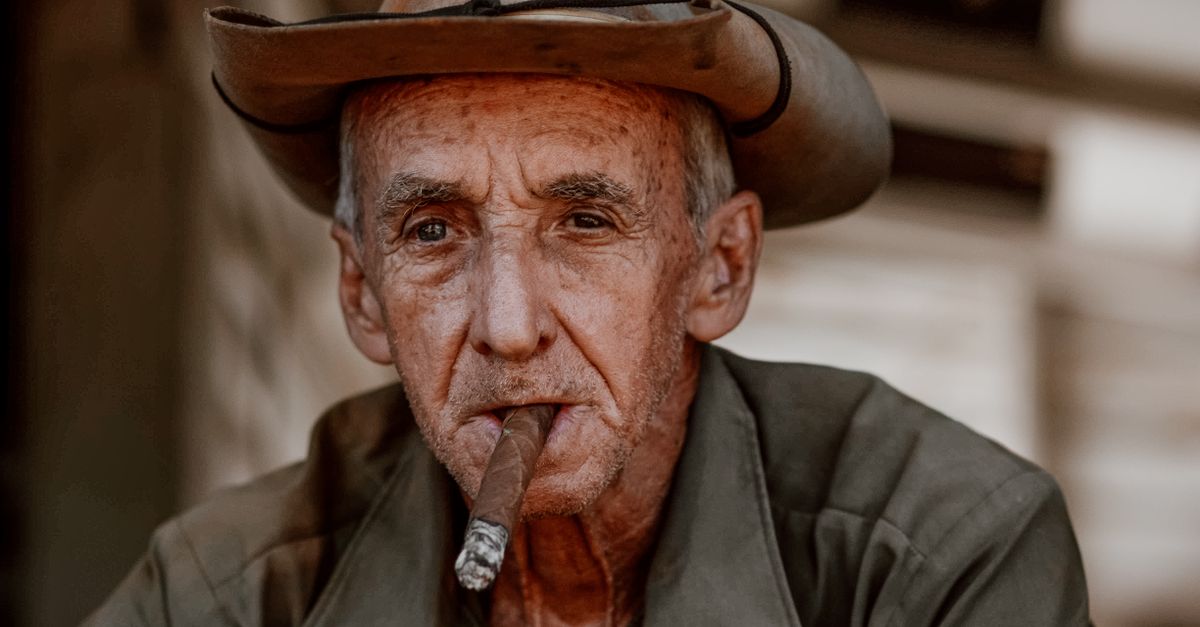
Smoking a cigar well comes down to four things: a clean cut, an even light, slow puffs, and a little patience. Unlike a cigarette, cigar smoke isn't meant to be inhaled. Draw it into your mouth, enjoy the flavor, then let it go. Take your time, and the cigar should stay smooth and burn cool. Rush it, and it can quickly become hot and bitter.
This guide covers the whole experience, from inspecting the cigar to setting down the nub, so your first one tastes the way it should.
How to smoke a cigar step by step
To smoke a cigar properly, move slowly and treat each step as part of the ritual. The whole point is to taste, not to rush. Here is the core flow from start to finish.
- Inspect the cigar. Roll it gently between your fingers. A good cigar feels firm with a slight give and shows no cracks or soft spots. A hard, brittle cigar is dry and will smoke hot.
- Cut the cap. Make one clean cut just above the shoulder, where the rounded cap meets the body. See how to cut a cigar for the exact spot and technique.
- Light the foot. Toast the open end first, then ignite it evenly with the flame just off the tobacco. Our full how to light a cigar guide covers this in detail.
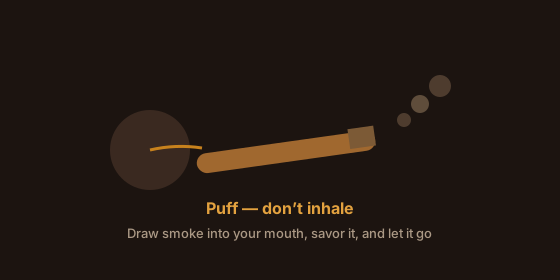
- Sip, don't inhale. Draw smoke into your mouth, hold it a second, taste it, and let it drift out. You do not pull it into your lungs.
- Pace yourself. Take one slow puff about every minute. Rushing overheats the cigar and ruins the flavor.
- Let the ash build. A healthy ash holds on for an inch or more. Tap it off gently over an ashtray when it is ready to fall.
- Know when to stop. Set the cigar down when it gets hot and harsh near the band, usually with an inch or two left.
How to hold a cigar
Hold a cigar between your thumb and index finger, the way you would hold a pen or a dart. This grip feels natural and keeps the cigar steady while you draw. Cigarettes get pinched between two fingers, but a cigar is thicker and sits better in a relaxed pincer hold near the band.
Keep the foot pointed slightly down between puffs so the burn stays even. Do not clench it in your teeth or let it dangle from your lips. A cigar spends most of its life resting in your hand or in an ashtray, not in your mouth. Holding it loosely also keeps your fingers off the hot end and away from the delicate wrapper.
Sip the smoke — do not inhale
You do not inhale cigar smoke into your lungs. This is the single biggest difference between a cigar and a cigarette, and the most common beginner mistake. Cigar smoke is meant to be tasted in the mouth, the way you would savor a sip of coffee or whiskey, then released.
Draw the smoke in slowly until your mouth is full, pause to pick up the flavors, and let it flow back out. Cigar tobacco is stronger and more alkaline than cigarette tobacco, so inhaling it usually triggers harsh coughing and a wave of nausea. For the full breakdown of why, read do you inhale cigars. Once you stop trying to inhale, the whole experience gets far more enjoyable.
Pace yourself to keep the cigar cool
Smoke a cigar slowly — about one puff per minute — to keep it burning cool and tasting smooth. The most common way beginners ruin a good cigar is by puffing too fast. Each draw pulls air through the cigar and raises the temperature at the burning end. Puff too often and the cigar overheats.
An overheated cigar turns bitter, ashy, and harsh, and no amount of resting fully fixes it. A cool-burning cigar produces a steady ribbon of smoke and a flavor that stays balanced. If the cigar starts to taste hot or sharp, you are smoking too fast. Set it down for a minute, let it cool, and slow your rhythm back down.
Retrohaling: a brief advanced move
Retrohaling means gently pushing a little smoke out through your nose to pick up aromas your mouth cannot detect. It is an advanced technique, so try it only after you are comfortable with the basics. The nose senses flavors like spice, cedar, and sweetness far more clearly than the tongue.
To retrohale, take a normal mouthful of smoke, close your lips, and ease a small amount up and out through your nose. Start with a tiny puff — too much at once stings. It takes practice, and it is entirely optional. Plenty of seasoned smokers enjoy cigars without ever retrohaling.
Ash, nub, and resting the cigar
Let the ash grow to about an inch before tapping it off, since a longer ash actually helps insulate the burn and keep the cigar cool. Roll the ash gently against the edge of an ashtray rather than flicking it like a cigarette. A clean, gray ash that holds together is a sign of a well-made, well-kept cigar.
Stop smoking when the cigar gets hot and the flavors turn harsh, usually with one to two inches left near the band — this stub is called the nub. There is no rule that says you must smoke to the very end. When you finish, simply rest the cigar in the ashtray and let it go out on its own. Do not stub it out like a cigarette; crushing it releases a stale, ashy smell.
Common beginner mistakes
| Mistake | What goes wrong | Do this instead |
|---|---|---|
| Inhaling the smoke | Coughing, dizziness, nausea | Sip and taste, then exhale |
| Puffing too fast | Cigar overheats, turns bitter | One slow puff per minute |
| Smoking a dry cigar | Burns hot and harsh | Keep cigars in a humidor |
| Cutting too deep | Wrapper unravels | Cut just above the shoulder |
| Stubbing it out | Releases a stale, ashy smell | Let it rest and die on its own |
| Relighting cold ash | Picks up a harsh, sour taste | Knock off old ash before relighting |
Conclusion
Knowing how to smoke a cigar is really about slowing down: cut clean, light evenly, sip the smoke instead of inhaling, and take your time. Keep your cigars in good shape and the rest falls into place. New to all of this? Start with our picks for the best cigars for beginners, then keep your sticks fresh with the right humidor and the Humidor Tracker so every cigar tastes its best. If you prefer to smoke in a dedicated space with proper ventilation, our cigar lounges guide explains what to expect on a first visit.
FAQ
How do you smoke a cigar for the first time?
Cut the cap cleanly, toast and light the foot evenly, then draw the smoke into your mouth without inhaling. Take one slow puff about every minute and stop when the cigar turns hot and harsh near the band. Going slow is the key to a good first cigar.
Do you inhale cigar smoke?
No, you do not inhale cigar smoke into your lungs. You draw it into your mouth, taste it, and exhale. Cigar tobacco is stronger than cigarette tobacco, so inhaling usually causes harsh coughing and nausea. See do you inhale cigars for the full explanation, and our guide on whether cigars are bad for you for the broader health picture.
How long does it take to smoke a cigar?
A typical cigar takes about 45 minutes to over an hour to smoke at a proper pace. Larger ring gauges and longer cigars take more time. Smoking faster to finish sooner overheats the cigar and ruins the flavor, so patience pays off.
Why does my cigar taste bitter or harsh?
A cigar usually tastes bitter because you are puffing too fast and overheating it, or because the cigar is dried out. Slow your pace to one puff per minute and let it cool. Storing cigars in a humidor at 65–70% humidity prevents the dry, harsh burn.
Should you smoke a cigar all the way down?
No, there is no need to smoke a cigar to the very end. Most smokers stop with one to two inches left, when the cigar gets hot and the flavors turn harsh. Rest the nub in an ashtray and let it go out naturally.
Should you remove the cigar band before smoking?
Either is fine. Tradition says leave the band on until the cigar burns down close to it, then slide it off before it gets too hot to touch. If the band feels stuck to the wrapper, warm it slightly or peel it off early instead of forcing it, since tugging on a stuck band can tear the wrapper leaf. The band itself is just the manufacturer's mark, and it dates back to a time when it also kept the cigar oils on the wrapper from staining a gentleman's gloves.
Does the technique change for a specific cigar brand or shape?
No. The core method above, a clean cut, an even light, and a slow sip, applies whether you're smoking a Backwoods, a Davidoff, a Montecristo, a Macanudo, or a Villiger. Shape changes the cut more than anything else: a torpedo or perfecto's pointed cap needs the careful, off-the-point cut covered in how to cut a cigar, while a robusto's flat cap takes the standard straight cut.
Ring gauge mostly changes how long a cigar burns and how fast it overheats if you rush it. A short Backwoods or a mini burns through faster than a long Churchill, so slow your pace even more on the small ones. "Black & Mild" and other little cigars follow the same don't-inhale rule as a full-size Cuban or Nicaraguan premium.
What does it mean to smoke a cigar "like a pro"?
It means following the same four habits covered above: a clean cut, an even light, slow puffs, and patience. Cigar creators like Kirby Allison and Michael Knowles, who also runs the cigar brand Mayflower Cigars, teach that identical core method in their own videos, just with their own pacing and delivery.
A search for "how to smoke a cigar like Tony Soprano" or "like a boss" is really asking for the same technique. Pop culture supplies the persona. The four habits do the rest.
Can you smoke a cigar without a cutter?
Yes, in a pinch, you can pinch a small opening in the cap with a fingernail, score it carefully with a sharp knife, or use scissors if you have them. None gives as clean a draw as a real cutter, so treat these as backups rather than a habit. See how to cut a cigar for the full breakdown of each backup method.
Can you smoke a cigar indoors or in the rain?
Indoors, only where smoking is allowed, since cigar smoke lingers in fabric and ventilation far more than a cigarette does. A covered porch or an open window helps if you're smoking inside your own home.
In the rain, a cigar smokes fine as long as you keep the lit foot dry and shielded, since wet tobacco burns unevenly and can go out. Neither situation changes the core technique. It just changes how much smoke and flame you need to manage.
How do you keep from smelling like cigar smoke afterward?
Change your outer layer, or at least air it out, since cigar smoke clings to fabric more stubbornly than cigarette smoke does. Rinse your mouth and hands, since the smell sits on skin as much as clothing. Smoking outdoors or near open airflow in the first place cuts down how much scent settles into your clothes to begin with.
Is it illegal to smoke a cigar if you're under 18 or 21?
In the United States, you must be 21 to buy cigars or any other tobacco product. The federal Tobacco 21 law passed in December 2019 raised the minimum purchase age nationwide, making 21 the standard across all states with no exceptions for cigars, cigarettes, or pipe tobacco. For the full rules on retail purchases and how shops handle online age verification, see our guide on how old you have to be to buy cigars.