Why Are Cuban Cigars Illegal?
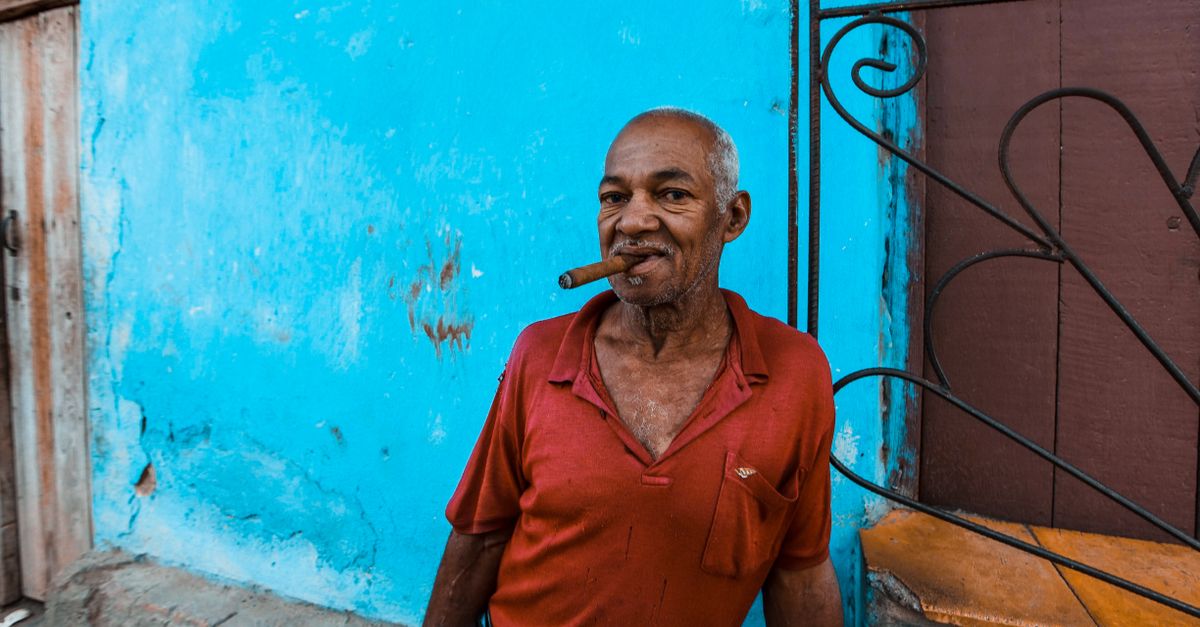
Cuban cigars are illegal in the United States because of the U.S. trade embargo on Cuba. Introduced in 1962, the embargo still prohibits the commercial import and sale of Cuban goods, including cigars. It stems from the Trading with the Enemy Act and is enforced through the Cuban Assets Control Regulations by the Treasury Department's Office of Foreign Assets Control (OFAC). Put simply, Cuban cigars are banned because of politics and sanctions, not because of the tobacco itself.
This guide covers the history behind the ban, what the rules actually prohibit, why so many cigars labeled "Cuban" are counterfeit, and how iconic brand names can exist in both Cuban and U.S.-legal versions. You can also explore our guides to what Cuban cigars actually are, how to buy them legally while traveling abroad, Cuban-seed cigars legally rolled in the U.S., and whether Cuban cigars get you high, they don't; that's a myth, not a legal issue.
Why are Cuban cigars illegal in the US?
Cuban cigars are illegal in the US because of a decades-old federal trade embargo against Cuba. In 1962, President Kennedy imposed a near-total embargo under the Trading with the Enemy Act, cutting off most trade between the two countries. The ban was a response to Cold War tensions after Cuba's 1959 revolution.
That embargo is now codified in the Cuban Assets Control Regulations, enforced by OFAC. The rules prohibit:
- Commercial import of Cuban-origin goods into the U.S.
- Sale of Cuban cigars by U.S. retailers.
- Dealing in Cuban products even when bought in a third country like Canada or Mexico.
Because the restriction is tied to a cigar's Cuban origin, a Cuban cigar bought legally abroad is still treated as embargoed once it reaches U.S. jurisdiction. The embargo has outlasted every president since Kennedy, which is why Cuban cigars remain illegal to buy and sell in the U.S. today.
Are Cuban cigars illegal in the US for personal use?
Whether Cuban cigars are illegal in the US for personal use has changed several times, so you should always verify the current rule with official sources before assuming anything. The commercial ban has been constant since 1962, but the personal-import allowance has shifted with each administration.
Here is the broad timeline, as of recent guidance:
| Period | Personal-import status (general) |
|---|---|
| 1962–2014 | No personal import of Cuban cigars allowed |
| 2014–2016 | Obama-era easing; limited personal amounts allowed for authorized travelers |
| 2016–2017 | Personal limits loosened further |
| 2020 onward | A 2020 policy change reinstated the prohibition on bringing Cuban cigars and rum into the U.S. for personal use |
Because these rules shift with administrations and policy changes, treat any specific allowance as potentially out of date. Before you travel, confirm the current status directly with U.S. Customs and Border Protection (CBP) and OFAC, which publish the official, up-to-date regulations. This article does not advise anyone to import Cuban cigars illegally; it only explains why the law exists.
As of 2026, the answer to "can I bring Cuban cigars home?" is still no for a US traveler. The September 2020 rule that ended the personal-use allowance has stayed in force through several years and multiple policy reviews, with no repeal in effect. You can buy and smoke Cuban cigars while you're physically in a country where they're legal, Cuba included. Packing them in your bag for the flight home is the part that stays illegal, and CBP can seize them at the border regardless of how few you're carrying. This exemption has swung back and forth before, loosened under one administration and pulled back under the next, so a traveler weighing this decision should check CBP's and OFAC's own guidance for the week they're flying rather than trust a number printed in an older article.
Can you buy Cuban cigars in the US?
No, you cannot legally buy Cuban cigars in the US, because the embargo bans their commercial sale. Any U.S. shop, website, or vendor openly selling "Cuban cigars" is either breaking the law or selling fakes. There is no licensed retail channel for genuine Cuban cigars inside the United States.
This creates a large counterfeit market. Industry observers have long noted that a large share of "Cuban cigars" sold to tourists are fake — rolled from inferior tobacco and dressed in copied bands. Travelers paying premium prices in markets and on street corners frequently end up with counterfeits, not Havanas. See our guide on how to spot a fake cigar for the specific band, seal, and pricing checks that catch most counterfeits.
The takeaway: if a U.S. seller offers genuine Cuban cigars, be skeptical. Legitimate, legal cigars in America come from many other great cigar-producing countries.
Cuban vs non-Cuban cigar brands (legal in the US)
Many famous cigar brand names exist as both a Cuban version and a separate non-Cuban version that is legally sold in the U.S. After the 1959 revolution nationalized Cuba's cigar industry, some original brand owners re-established their names abroad. The result is two distinct cigars sharing one name.
| Brand | Cuban version | Non-Cuban version (sold in US) |
|---|---|---|
| Cohiba | Cuban state-made (Habanos) | General Cigar's Cohiba, made outside Cuba |
| Montecristo | Cuban (Habanos) | Montecristo made in the Dominican Republic |
| Romeo y Julieta | Cuban (Habanos) | Non-Cuban version made in the Dominican Republic |
| Partagás | Cuban (Habanos) | Non-Cuban version made in the Dominican Republic |
The two are different cigars made in different countries with different tobacco, even though the names match. So when you see "Cohiba" or "Montecristo" on a U.S. shelf, it is the legal non-Cuban version — not a smuggled Havana. You can explore the non-Cuban Cohiba and non-Cuban Montecristo lines, both widely available and fully legal. For a side-by-side breakdown of how Cuban and Dominican cigars differ in flavor, strength, and aging, see our Cuban vs Dominican cigars comparison.
Are Cuban cigars legal in the US? Why the "best" label sticks
The short answer stays the same: Cuban cigars are illegal to import into the United States, and it has been that way since the Cuban embargo began in 1962. But the details have shifted over time — and the reason so many smokers still consider Cuban cigars "the best" has as much to do with history as with current tobacco quality.
The current state: As of the most recent Treasury Department guidance, U.S. residents cannot legally import, buy, or sell Cuban cigars. Personal-use imports from Cuba were briefly allowed under the Obama-era thaw and then restricted again. Bringing Cuban cigars into the U.S. — even from another country — is a customs violation, and the cigars can be seized at the border.
Why the "best" reputation: For most of the 20th century, Cuban tobacco was the standard of the world. Habanos had legendary richness, and the country's Vuelta Abajo region grew tobacco no one else could match. When production diversified after the embargo, master blenders trained in Cuba fled to Nicaragua and the Dominican Republic — the Garcia family (My Father), the Padróns (Padrón), and many others. The blenders left; the reputation stayed.
Today's reality: Blind-tasting reviews consistently show that the top modern Nicaraguan and Dominican cigars — Padrón 1926, Fuente Opus X, My Father Le Bijou 1922 — compete on even ground with Cuban Cohiba Behike and Partagás Serie D No. 4. The "Cuban is best" label is now more about mystique than a clear quality gap.
Are Cuban cigars illegal in other countries?
The embargo is a US sanction, not a global one — so the answer changes completely once you leave American jurisdiction. Cuba trades cigars openly with most of the rest of the world, and each country sets its own, unrelated rules for how much a traveler can bring in.
| Country | Legal to buy/sell? | What's different there |
|---|---|---|
| Canada | Yes | No Cuba embargo; sold openly by Canadian tobacconists. Ordinary Canadian personal tobacco-duty allowances apply to travelers, same as any other imported tobacco. |
| United Kingdom | Yes | Cuban cigars have a long-standing retail presence through specialist British cigar merchants — a market that predates the US embargo itself. |
| Ireland / EU | Yes | No EU-wide Cuba sanctions; legal across member states, Ireland included, under normal EU tobacco excise and duty rules. |
| Australia | Yes | Legal to sell, but Australia runs one of the strictest personal tobacco-import regimes in the world — travelers are capped at a small quantity without a separate import permit, a general tobacco-control policy that applies to all cigars, not just Cuban ones. |
| Mexico | Yes | A long-time Cuban trading partner; Cuban cigars are a routine purchase for tourists in Cancún and Cozumel, sold at ordinary retail alongside Nicaraguan and Dominican brands. |
| India | Yes | No Cuba-specific import ban. Cuban cigars are openly sold through licensed importers and premium tobacconists, taxed the same way as any imported cigar under India's general tobacco law. See our full cigar legality in India guide for the age limit, duty-free allowance, and tax rate. |
Most of the rest of the world treats Cuban cigars this way. Once a country has no separate sanctions program against Cuba, a Cuban cigar gets stocked, taxed, and sold the same as any other imported cigar. The US position, banning the cigar outright over its country of origin, is the unusual one.
Bringing one of these home to the US afterward is a separate question — see "Are Cuban cigars illegal in the US for personal use?" above for why "bought legally abroad" doesn't mean "legal to import."
How much do Cuban cigars cost in Cuba?
Cuban cigars are noticeably cheaper inside Cuba than the "Cuban" cigars sold at marked-up prices elsewhere, because they're bought directly at the source without import duties, gray-market markups, or counterfeit-avoidance premiums. At government-run La Casa del Habano shops in Havana — the standard, legitimate retail channel — mainstream lines typically run from around $5 to $25 per cigar, while rare or limited-edition Cohibas can run well above that when available at all. Prices have climbed noticeably in recent years, so treat any specific figure as a rough guide rather than a quote.
That local pricing doesn't change the U.S. import picture covered above: even a cigar bought legally at full price in Havana is still a Cuban-origin good, and bringing it into the United States remains restricted under the embargo (see "Are Cuban cigars illegal in the US for personal use?").
FAQ
Why are Cuban cigars illegal in the US?
Cuban cigars are illegal in the US because of the trade embargo against Cuba that began in 1962. The embargo, enforced by OFAC under the Cuban Assets Control Regulations, bans the commercial import and sale of Cuban-origin goods, including cigars.
Can you bring Cuban cigars into the US?
The rules on bringing Cuban cigars into the US have changed over time, and a 2020 policy change reinstated the prohibition on personal imports. Because these rules shift with administrations, always confirm the current status with CBP and OFAC before traveling.
Can you buy Cuban cigars in the US legally?
No. The embargo bans the commercial sale of Cuban cigars in the U.S., so no licensed retailer can sell them. Any U.S. vendor advertising genuine Cuban cigars is either breaking the law or, more often, selling counterfeits.
Are the Cohiba and Montecristo sold in the US real?
Yes, but they are the non-Cuban versions. Brands like Cohiba, Montecristo, Romeo y Julieta, and Partagás exist as both a Cuban line and a separate non-Cuban line. The cigars sold legally in the U.S. are the non-Cuban versions, made mostly in the Dominican Republic.
Are most Cuban cigars sold to tourists fake?
A large share of "Cuban cigars" sold to tourists are counterfeit. They are often rolled from low-grade tobacco and sold with copied bands at premium prices, especially in informal markets, so genuine Havanas are far rarer than the sales pitches suggest.
Are Cuban cigars illegal in Canada, the UK, or Australia?
No. The US embargo is a unilateral American sanction — Canada, the UK, the EU (including Ireland), Australia, and Mexico all have normal trade with Cuba, and Cuban cigars are legal to buy and sell in each of them.
Why did Cuban cigars become illegal?
Cuban cigars became illegal in the US because Fidel Castro's government nationalized Cuba's tobacco industry, seizing cigar factories and foreign-owned assets after the 1959 revolution. The Cuban government took control of major producers like the Hoyo de Monterrey factory in 1960, wiping out the American-owned stakes in Cuban tobacco almost overnight. Washington answered with escalating trade restrictions that Kennedy folded into the full 1962 embargo covered above. The embargo was retaliation for the seizures, not a judgment on the tobacco itself.
Are Cuban cigars still illegal?
Yes. Nothing about the core ban has changed as of 2026: Cuban cigars remain illegal to import, buy, or sell commercially in the United States, and the personal-use travel exemption ended in September 2020. Periodic proposals to ease Cuba policy surface in Congress every few years, but none has repealed the embargo itself.
Why are Cuban cigars still illegal?
Cuban cigars are still illegal because Congress locked the embargo into federal law in 1996, through the Cuban Liberty and Democratic Solidarity Act, better known as the Helms-Burton Act. Before that law, the embargo existed only as a set of executive orders a president could unwind on their own. Helms-Burton changed that: now only an act of Congress can lift it, which is why a friendlier White House can ease travel rules or personal-use limits at the margins, the way the Obama administration briefly did, without ever touching the underlying ban. That is also why "the embargo will end soon" predictions keep not panning out.
Can I buy Cuban cigars on Amazon or eBay?
No, you cannot legally buy genuine Cuban cigars on Amazon, eBay, or any other U.S. marketplace, because the embargo bars U.S.-based commercial sale of Cuban-origin goods and both platforms prohibit the listings outright. Any "Cuban cigar" listing you find on a mainstream U.S. marketplace is either a counterfeit, a mislabeled non-Cuban cigar (like the U.S.-legal Cohiba or Montecristo lines), or an illegal listing that violates the platform's own policies as well as federal law.
Can I order Cuban cigars online and have them shipped to the US?
No. Ordering Cuban cigars from an overseas website and having them shipped to a U.S. address is still subject to the embargo, regardless of where the seller or website is based or how the purchase itself was legal in that country. Packages identified as containing Cuban-origin goods are subject to seizure by U.S. Customs and Border Protection, and buyers can face additional penalties — shipping around the rules doesn't work any better than carrying them through an airport.
What Cuban cigars did JFK smoke, and why does that matter?
The story often cited is press secretary Pierre Salinger's own account, published in Cigar Aficionado in 1992: the night before signing the 1962 Cuban embargo, President Kennedy — a well-documented H. Upmann smoker — reportedly asked Salinger to track down roughly 1,200 H. Upmann Petit Coronas, which Salinger secured by the next morning just before Kennedy signed the order banning Cuban products. It's a widely repeated anecdote rather than an independently verified historical record, but it's often cited because it captures the embargo's central irony: the same administration that made Cuban cigars illegal for everyone else made sure the president wouldn't run out.
Are Cuban cigars overrated?
Not entirely, but the "best in the world" label rests more on history and mystique than on a clear, current quality gap. Cuban tobacco genuinely earned its legendary status through most of the 20th century, and the Vuelta Abajo region's growing conditions remain unique. But as covered above, the master blenders who built that reputation scattered to Nicaragua and the Dominican Republic after the embargo, and modern blind tastings routinely show top non-Cuban cigars — Padrón 1926, Fuente Opus X, My Father Le Bijou 1922 — competing on even footing with Cuban Cohiba Behike and Partagás Serie D No. 4. So Cuban cigars aren't overrated in the sense of being low quality; they're overrated only to the extent buyers assume no non-Cuban cigar can match them.
Are there American-made cigars?
Yes, though they're a small niche compared to Nicaraguan, Dominican, and Honduran production. American cigars mostly mean one of two things: cigars rolled with US-grown wrapper leaf (Connecticut Shade and Connecticut Broadleaf are the best-known, despite often being rolled abroad), or the smaller number of brands that actually grow, ferment, and roll domestically, largely concentrated around Ybor City, Florida and a handful of boutique makers elsewhere in the US. Either way, "American cigar" isn't a legal category the way "Cuban cigar" is — it's just a country-of-origin or wrapper-origin description, with none of the embargo restrictions covered above.
Do Cuban cigars age well?
Yes — properly humidified Cuban cigars are known for aging especially well, with well-stored boxes routinely improving for years and sometimes decades as the tobacco mellows and its flavors integrate. That's true of premium cigars generally, not just Cuban ones, but it doesn't change the legal picture: aging a Cuban cigar in a home humidor is only relevant once the cigar has legally reached that humidor, which — as covered above — remains restricted for cigars brought into the US. See our guide to how long cigars last for how humidity, temperature, and storage time affect aging in general.
How do Cuban cigars compare to Nicaraguan cigars?
Cuban cigars are known for a balanced, medium-full profile centered on earth, cedar, and leather, whereas Nicaraguan cigars offer a bolder, noticeably spicier character. Tobacco grown across Estelí, Jalapa, and Condega is also completely legal to import, buy, and sell in the United States, while Cuban cigars remain illegal under the federal trade embargo. Read our Cuban vs. Nicaraguan cigars comparison for the complete breakdown of flavor notes, construction quality, and top brands from both regions.
Conclusion
So, why are Cuban cigars illegal? It traces back to the 1962 U.S. embargo on Cuba, still enforced by OFAC, which bans their commercial import and sale. The personal-import rules have changed repeatedly and were tightened again in 2020, so always verify the current status with official CBP and OFAC sources rather than trusting any single claim. The good news for U.S. smokers: legendary names like Cohiba and Montecristo are sold here legally as non-Cuban versions. Ready to find your next great smoke? Start with our guide to the best cigars.