How Long Do Cigars Last?
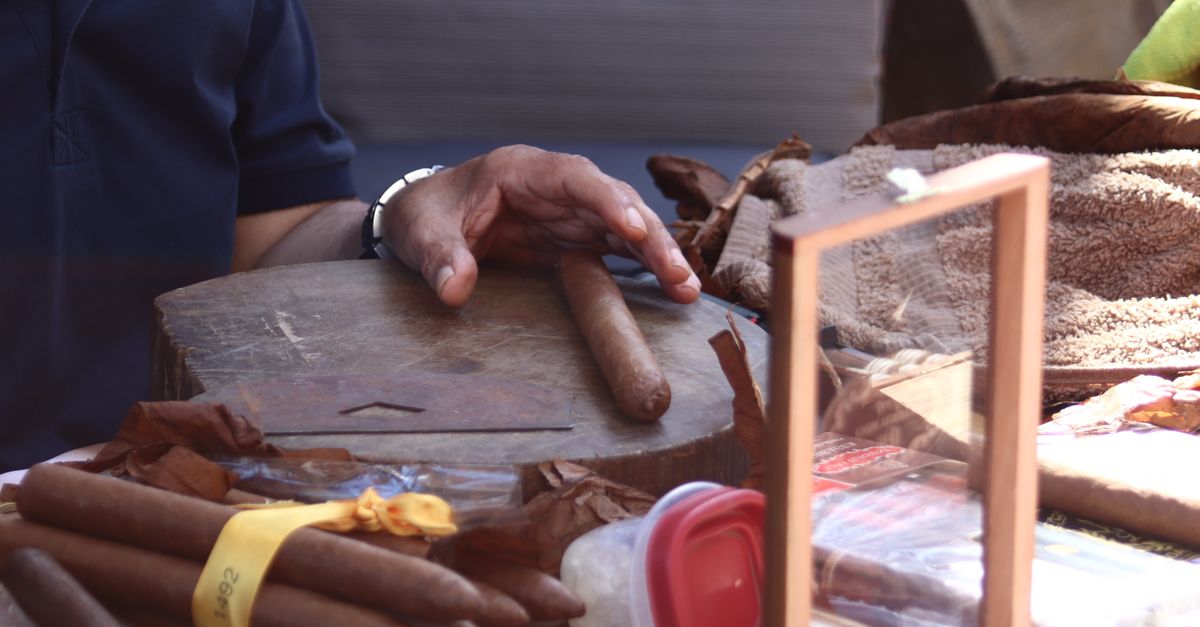
How long a cigar lasts comes down to one thing: storage. Left in the open, a cigar dries out and turns harsh within 2 to 3 days. Store that same cigar in a humidor at the right humidity, and it can stay in peak condition for years. Many premium cigars even improve with age.
Cigars don't have a fixed expiration date. Instead, they gradually lose moisture. Once dried out, they tend to burn hot and fast and taste bitter.
This guide explains how long cigars last in different storage conditions, how to tell when one has gone bad, and the simple setup you need to keep them fresh for the long haul.
Our Top Picks
How we pick: we weigh quality, real-world performance, and value across strengths and budgets — and only list what we’d actually buy. Buying through our links may earn us a commission at no extra cost to you.
The set-and-forget standard. Each pack both adds and absorbs moisture to hold a precise 69% — drop one in, check a hygrometer, and stop fiddling with your humidor.
Check price on Amazon →- Best Overall
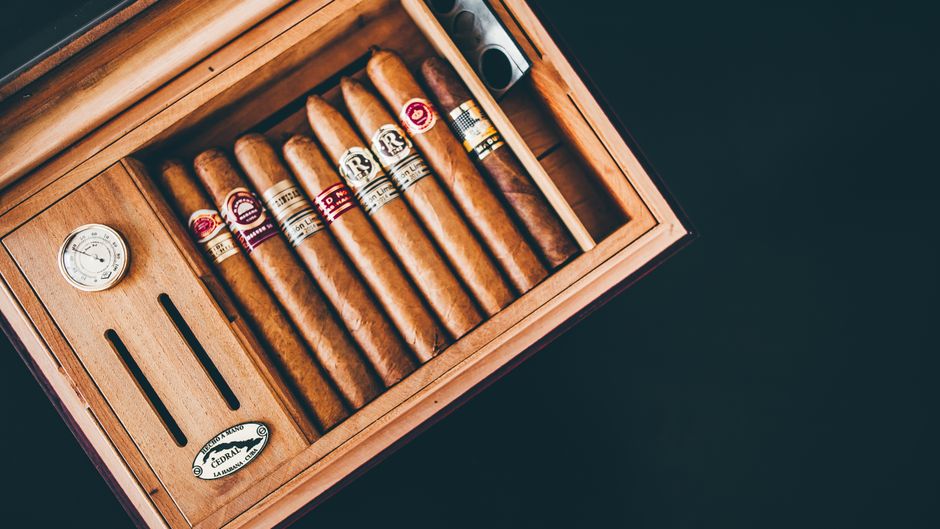
Boveda 69% RH Size 60 (8-Pack)
The default for most desktop humidors.
The set-and-forget standard. Each pack both adds and absorbs moisture to hold a precise 69% — drop one in, check a hygrometer, and stop fiddling with your humidor.
Check price on Amazon →- 2-way control holds 69% exactly
- No distilled water, no guesswork
- Sized right for ~25-count boxes
- Replace every 2–4 months
- Editor’s Pick
Boveda 65% RH Size 60 (4-Pack)
A drier store for a firmer draw.
Choose this over the 69% if you live somewhere humid or like a firmer, easier-burning cigar. Same foolproof packs, just a slightly drier target.
Check price on Amazon →- Same tech tuned to 65%
- Great in humid climates
- Prevents over-humidifying
- A touch dry for some palates
- Best for a New Humidor
Boveda 84% RH Seasoning Pack (Size 60)
Seasoning a brand-new humidor.
Use this before your first cigars ever go in. It seasons the dry cedar so the box stops stealing moisture from your cigars — far safer than the wet-sponge method.
Check price on Amazon →- Brings cedar to spec without water
- Foolproof — no over-wetting
- No mold risk
- Single-use; not for storage
- Best for Travel
Boveda 69% RH Size 8 (10-Pack)
Travel cases, jars, and single boxes.
The right Boveda for everything that isn’t a full humidor — travel cases, glass jars, a single box of cigars. Buy the 10-pack so you always have a fresh one.
Check price on Amazon →- Small size fits travel cases
- 10-pack keeps you stocked
- Same precise 69%
- Too small for large humidors
| Pick | Best for | Price | |
|---|---|---|---|
| Best OverallBoveda 69% RH Size 60 (8-Pack) | The default for most desktop humidors. | $25 | Check price → |
| Editor’s PickBoveda 65% RH Size 60 (4-Pack) | A drier store for a firmer draw. | $14 | Check price → |
| Best for a New HumidorBoveda 84% RH Seasoning Pack (Size 60) | Seasoning a brand-new humidor. | $8 | Check price → |
| Best for TravelBoveda 69% RH Size 8 (10-Pack) | Travel cases, jars, and single boxes. | $15 | Check price → |
Prices are indicative and change often — tap through for the live price on Amazon.
How long do cigars last without a humidor?
A cigar left in open air stays smokable for only 2 to 3 days before it dries past the point of enjoyment. Tobacco is hygroscopic, which means it constantly trades moisture with the air around it. Most indoor air sits near 30–40% relative humidity, far below the 65–70% a cigar needs. The cigar gives up moisture fast, the wrapper cracks, and the oils that carry flavor evaporate.
A few short-term fixes buy you more time:
- Sealed bag or jar: A zip-top bag pushes a cigar to about a week. It slows moisture loss but cannot replace it.
- Bag plus a humidity pack: Add one Boveda humidity pack to that bag and you reach 2–4 weeks in good shape.
- Cellophane sleeve: The cellophane a cigar ships in slows drying slightly. It does not seal in moisture on its own.
These are stopgaps, not storage. If you plan to keep cigars longer than a couple of weeks, you need humidity control.
How long do cigars last in a humidor?
In a properly maintained humidor, cigars last years with no loss of quality. A humidor holds a stable 65–70% relative humidity and a temperature near 70°F (21°C), the climate cigars are rolled and aged in. At that balance, the wrapper stays supple, the oils stay intact, and the cigar burns the way the maker intended.
Many premium, well-aged cigars get better over time. Aging mellows harsh notes and lets the blend marry, a slow process cigar makers call "resting." Five-, ten-, even twenty-year-old cigars are prized by collectors for exactly this reason. The limit is not the tobacco — it is whether your storage stays stable.
A reliable long-term setup is straightforward: a cigar humidor seasoned before first use, a hygrometer to confirm the humidity, and humidity packs or distilled water to hold the level. See our full guide on how to store cigars for the step-by-step.
Humidor vs. unprotected: shelf life compared
The gap between protected and unprotected storage is the single biggest factor in how long a cigar lasts. Left in the open, a cigar has roughly 2 to 3 days before it dries past enjoyable; kept in a properly maintained humidor at 65–70% RH, the same cigar can last for years — and some collectors successfully hold well-built, age-worthy cigars for decades without any loss of quality, often with real improvement in flavor along the way.
The difference isn't the tobacco, it's the environment. A humidor removes the two biggest threats to shelf life: moisture loss, which happens fast in open, dry air, and instability, meaning temperature and humidity swings that stress the wrapper even when the average reading looks fine. Hold both steady near 65–70% RH and 65–70°F, and there's effectively no upper limit on how long a well-made cigar can be stored.
Storage methods and how long they last
| Storage method | How long cigars stay fresh | Best for |
|---|---|---|
| Open air | 2–3 days | Smoking today |
| Cellophane only | Up to ~1 week | Carrying one for the day |
| Sealed bag (no pack) | ~1 week | Short trips |
| Bag or jar + humidity pack | 2–4 weeks | A week or two of buffer |
| Travel case + pack | 1–2 weeks | Travel |
| Seasoned humidor | Years (can improve) | Anything beyond a few weeks |
The pattern is simple: the closer your storage holds 65–70% humidity, the longer your cigars last.
How to tell if a cigar has gone bad
A dried-out cigar gives itself away by feel and sound. Three quick checks tell you where a cigar stands:
- The pinch test: Gently squeeze the cigar. A well-kept cigar gives slightly and springs back. A dry one feels stiff and brittle.
- The sound test: Hold it to your ear and roll it between your fingers. A crackle means the wrapper and filler have dried out.
- Look at the wrapper: Cracks, flaking, or a brittle, papery feel all signal moisture loss.
Two problems are worth knowing apart. Dryness is the common one and is sometimes partly recoverable by re-humidifying slowly over weeks — though some flavor is lost for good. Mold, a fuzzy growth from over-humidification above ~75%, means the cigar should be thrown out. Do not confuse mold with plume (also called bloom), a harmless light dusting of crystallized oils that brushes right off.
Conclusion
How long cigars last comes down to one number: humidity. Out in the open they fade in days; in a humidor at 65–70% they keep for years and may even improve. If you own more than a handful of cigars, a small seasoned humidor with a humidity pack is the single best thing you can do to protect them. Want to track how long each cigar has been resting and get a nudge before your humidity packs run dry? That is exactly what the Humidor Tracker is built for.
Do cigars expire? Do cigars go bad?
Handmade cigars don't "expire" the way food does — but they absolutely can go bad if stored poorly, and their character definitely changes over time (usually for the better, sometimes for the worse).
Do cigars expire? Not on a fixed timeline. A well-stored cigar can last for decades — some Cuban Cohibas from the 1970s still smoke beautifully today, and Padrón 1926 sizes are designed to be aged. Cigars stored at 65-70% humidity and 65-70°F in a proper humidor keep improving for years.
Do cigars go bad? Yes, in three specific ways:
- Dry-out. Below about 55% humidity, cigars lose their essential oils, the wrapper cracks, and the smoke gets hot and harsh. Once fully dried out, recovery is possible but the cigar rarely comes back to full character. Store yours in a well-tuned humidor.
- Mold. Above about 75% humidity, mold can form on the wrapper — often blue-green fuzzy growth. This is different from "plume" (harmless crystalline deposit). Mold-affected cigars should be tossed; the whole box is at risk.
- Tobacco beetles. Rare but destructive. Small pinholes in the wrapper indicate beetle activity. Freeze affected cigars for 72 hours, then dispose of any obviously damaged sticks.
The practical answer: a properly stored premium cigar has an effectively indefinite shelf life. Store it right and it will only get better.
FAQ
Do cigars expire or go bad?
Cigars do not have an expiration date, but they do go bad when they dry out or grow mold. A dried cigar smokes harsh and fast; a moldy cigar should be discarded. Stored at 65–70% humidity, cigars stay good for years.
Can you smoke a dried-out cigar?
You can smoke a dried-out cigar, but it will burn hot and fast and taste bitter and harsh. Slowly re-humidifying it over several weeks in a humidor can partly restore it, though some flavor is lost permanently.
How long do cigars last in a Ziploc bag?
Cigars last about a week in a sealed Ziploc bag and 2–4 weeks if you add a Boveda humidity pack. A bag slows moisture loss but is a short-term fix, not a substitute for a humidor.
Does putting cigars in the fridge keep them fresh?
No. A refrigerator is cold and very dry, which pulls moisture out of cigars and dries them faster. Store cigars in a humidor at room temperature instead — never the fridge or freezer for routine storage.
Do cigars have nicotine?
Yes, cigars contain significant amounts of nicotine. A single large cigar can contain as much nicotine as an entire pack of cigarettes, though absorption is lower since cigar smoke is not inhaled. See our guide on do cigars have nicotine for the full breakdown by size and strength.
Are cigars bad for you?
All cigar smoke carries health risks even without inhaling. For a sourced overview of what the evidence shows, see our guide on whether cigars are bad for you.
How long do Cuban cigars last?
Properly humidified Cuban cigars can age for decades and often improve with time — collectors regularly smoke 20-, 30-, even 50-year-old Cubans that have mellowed into something far smoother than they were fresh. The catch is that Cuban cigars fail the same way any premium cigar does: dry-out below about 55% RH, mold above roughly 75% RH, and tobacco beetle damage if temperatures climb into the mid-70s°F or higher. There's nothing uniquely fragile — or uniquely durable — about Cuban tobacco; the same 65–70% humidor discipline that protects any cigar protects a Cuban one.
How long does a cigar last once you light it?
That's a different question from shelf life — once lit, most cigars burn for about 45 minutes to over an hour, and larger ring gauges run longer. See our how to smoke a cigar guide for the pacing that keeps a cigar burning cool for its full smoking time instead of overheating and cutting it short.
How long does cigar smell last?
Cigar smoke clings to clothes and hair for several hours up to a full day, and to breath for one to several hours after you finish smoking. Cigar smoke is denser and oilier than cigarette smoke, so it settles into fabric more stubbornly — airing garments outdoors or washing them clears it faster than it clears on its own indoors. For breath, water, brushing your teeth, or a strong mint cuts the smell down quickly, though a faint trace can linger for an hour or two after a full cigar.