History of Cigars
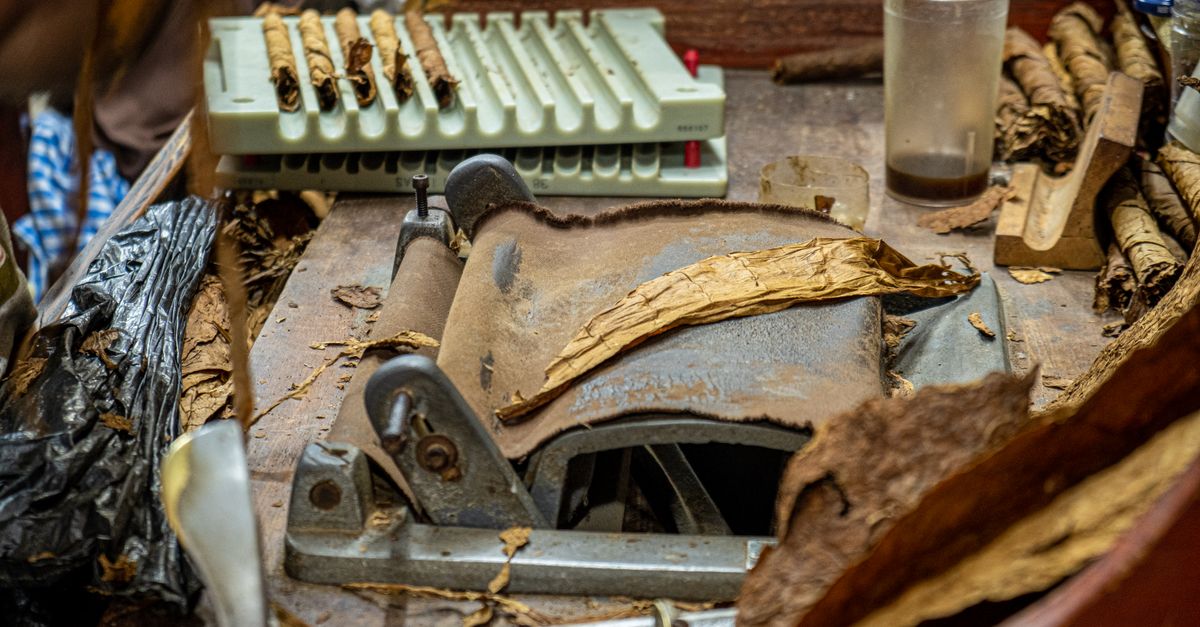
When were cigars invented? There's no single date. Their origins go back more than a thousand years to the Indigenous peoples of the Caribbean and Central America. Long before Europeans arrived, the Maya and Taíno were rolling and smoking bundles of tobacco leaves. Columbus's crew first documented the practice in 1492, but cigars were already ancient by then, born in the Americas centuries before they appeared in written records.
In this guide, we'll explore the history of cigars: who first smoked them, where the word "cigar" came from, and how tobacco traveled from the New World to Europe and eventually into the industrial age.
For more cigar trivia, take a look at our cigar slang and nicknames guide or our roundup of cigar quotes, jokes, and YouTube channels. To see what's happening in the hobby today, check out our guide to cigar events and festivals.
When were cigars invented?
Cigars were invented by the indigenous peoples of the Americas centuries before European contact, so no exact date exists. Archaeological evidence and early European accounts point to tobacco smoking among the Maya and other Mesoamerican cultures well over a thousand years ago. The Maya are often credited with the earliest cigar-like form: tobacco leaves rolled inside another leaf or wrapper.
Because this history predates written European records, scholars describe the origin as ancient and approximate. There was no inventor and no founding year. Instead, the cigar emerged slowly within native cultures, used in daily life and in ritual and ceremony.
Who invented cigars?
Cigars were first made by Native American peoples, especially the Maya and later the Taíno of the Caribbean. These cultures cultivated tobacco and smoked it in forms that resemble the modern cigar. Tobacco held real meaning for them. It appeared in social gatherings, healing practices, and sacred rituals.
When Christopher Columbus reached the Caribbean in 1492, his crew met the Taíno people. Two of his sailors, often named in historical accounts as Rodrigo de Jerez and Luis de Torres, are said to have witnessed locals smoking rolled tobacco leaves. They were among the first Europeans to record the habit. So Europeans did not invent cigars. They encountered them.
Where did cigars originate?
Cigars originated in the Americas — the Caribbean and Central America — among native tobacco-growing cultures. The plant Nicotiana tabacum is native to this region, and the peoples there had used it for generations.
The word "cigar" likely traces back to the Mayan word "sikar," meaning to smoke rolled tobacco leaves. From there came the Spanish "cigarro," which English speakers later shortened to "cigar." The language itself records the journey from native practice to European adoption.
How tobacco spread to Europe
Tobacco spread from the Americas to Europe in the 1500s, carried home by Spanish and Portuguese explorers and traders. At first it was treated as a curiosity and a medicine. Over the century, smoking gained a following among European elites.
Spain became the early center of European cigar culture. Spanish growers and merchants controlled much of the tobacco trade. Two regions stood out:
- Cuba: A Spanish colony with an ideal climate, Cuba became famous for high-quality tobacco and remains tied to cigars today.
- Spain: The city of Seville grew into an early cigar-making hub, processing tobacco shipped from the colonies.
For centuries, Cuba and Spain shaped what the world thought a fine cigar should be. To understand how politics later complicated that legacy, see why Cuban cigars are illegal in the United States.
How cigars became an industry
Cigar making grew into a true industry in the 1800s. Before then, cigars were rolled by hand in small batches. Rising demand across Europe and the Americas changed that.
Several shifts drove the boom:
- Factories: Large cigar factories opened in Cuba, Spain, and later the United States, especially in Florida.
- Brands: Named cigar brands emerged, building reputations that buyers trusted. The modern Cohiba brand, founded much later in 1966, became one of the most recognized of all.
- Global trade: Steamships and railways carried cigars farther and faster than ever before.
By the late 1800s, the cigar had moved from a native tradition to a worldwide commercial product. Hand-rolling survived as a mark of quality, and it still defines premium cigars today.
Timeline: a short history of cigars
| Era | What happened |
|---|---|
| Over 1,000 years ago | Maya and other native peoples roll and smoke tobacco leaves |
| Pre-1492 | Taíno of the Caribbean continue tobacco-smoking traditions |
| 1492 | Columbus's crew records native tobacco smoking |
| 1500s | Spanish and Portuguese traders carry tobacco to Europe |
| 1500s–1600s | Cuba and Seville, Spain emerge as tobacco centers |
| 1800s | Cigar making industrializes; factories and brands appear |
| Today | Premium cigars still hand-rolled, prized worldwide |
The pattern is clear: an ancient native craft slowly became a global tradition.
Conclusion
When were cigars invented? The honest answer is that cigars were never invented on one day. They grew out of ancient tobacco traditions among the Maya and Taíno of the Americas, long before Columbus's crew described them in 1492. From there, tobacco crossed the Atlantic, took root in Cuba and Spain, and industrialized in the 1800s. The cigar you enjoy today carries more than a thousand years of history. To go deeper into the craft, explore our full cigar history coverage and our roundup of the best cigar brands carrying that tradition forward.
Modern cigar houses: the Nicaraguan renaissance
Cigar history is often told as a Cuban story — and that's where the tradition starts. But the last thirty years have seen a Nicaraguan renaissance that's reshaped which cigars appear on top-of-year lists.
Nicaragua began exporting premium cigars seriously in the 1970s after Cuban master blenders left the island. José Orlando Padrón established Padrón Cigars in 1964; the Garcia family launched My Father in 2003 after decades of blending for other houses. Today, Estelí — Nicaragua's cigar capital — is home to more than a dozen major factories and dozens more boutique brands. Aganorsa Leaf, Warped, Illusione, Placencia (the same Placencia family that once made Placensia Reserva Original and other blends), and countless others operate out of the region.
The Placencia Reserva Original is one of the older Nicaraguan lines — a family whose Placencia name appears throughout modern cigar history. Nestor Placencia (the family patriarch) built one of the largest factory operations in the country and grew tobacco for many of the brands the modern market takes for granted.
If you smoke a modern premium cigar today, the odds are strong that its tobacco or its blender traces back through Nicaragua. The Cuban tradition endures; the Nicaraguan story is what's writing the next chapter. Padrón and My Father both started as someone founding a cigar brand from scratch — for what that process looks like today, see our guide on how to start a cigar brand.
Cuban cigars specifically
Cuban cigars occupy a distinct place in this history because production has stayed concentrated in one region under one government-controlled company for over 60 years. The most prized tobacco still comes from the Vuelta Abajo region of Pinar del Río, a red-clay valley whose soil and microclimate produce the earthy, cedar-and-leather character collectors associate with Havana leaf — the same region referenced in our Cuban vs Dominican cigars comparison.
The industry's modern structure dates to the Cuban Revolution. Cigar factories initially kept operating as private businesses after January 1959, but on September 15, 1960, the Cuban government nationalized all private tobacco businesses. In 1962 the state formed Cubatabaco to run production and exports, discontinuing over a hundred independent export brands in the process. In 1994 the government spun off a dedicated export arm, Habanos S.A., which became a 50/50 joint venture in 2000 and remains the sole legal exporter of Cuban cigars today. Every authentic Cuban cigar — Cohiba, Montecristo, Partagás, Romeo y Julieta, and the rest — is still hand-rolled by a torcedor under that single state umbrella.
Winston Churchill's cigar habit
No single smoker did more for cigar culture's public image than Winston Churchill, and the habit was not a prop — it was decades-long and well documented. Churchill picked up cigars while stationed in Cuba in 1895 as a young army officer and cavalry correspondent, and he smoked for the rest of his life, reportedly averaging 8 to 10 cigars a day into his 90th year. His favored brand was Romeo y Julieta, though accounts also place La Aroma de Cuba among his regulars. Churchill kept a dedicated, climate-controlled cigar room at his home, Chartwell, sized to hold thousands of cigars at once. The 7 x 47 Churchill vitola carried in cigar sizes charts today — covered in our cigar sizes guide — is named directly for him, a naming tribute that has outlasted almost every other historical namesake in the category.
Churchill wasn't the only public figure whose cigar habit became part of his act. Comedian George Burns smoked ten to fifteen cigars a day for most of his career, nearly all of them El Producto Queens, a perfecto-shaped, budget-tier cigar he became the paid brand ambassador for in 1929. According to Cigar Aficionado's account of the brand's history, Burns favored the Queens for a practical reason as much as taste: the cigar held its light through his stand-up routine without going out on stage. Our guide to famous cigar smokers lists what Burns, Churchill, Twain, and others were documented smoking.
Fidel Castro picked up his father's habit at 15 and, per Cigar Aficionado's own 1985 interview with Castro, smoked Partagás, H. Upmann, and Romeo y Julieta Churchills for years before Cohiba was blended specifically for his personal use in 1966. Castro gave those early Cohibas away as diplomatic gifts for over a decade before Habanos S.A. sold the brand to the public in 1982, and he quit smoking entirely in 1985 to set a public example during a national anti-smoking push.
Cigars in film and documentaries
Cigar culture has its own body of screen history, split between documentaries made about the industry and the handful of on-screen smokers who shaped how audiences picture a cigar. On the documentary side, Hand Rolled (2019), narrated by Peter Weller, traces the modern cigar industry's roots back to the Cuban Revolution of the 1950s. The History of Cigars (2019), directed by Jeral Clyde II, interviews industry figures including J.C. Newman's Eric Newman. Smoking Hot: The Untold Story of Women and Cigars focuses on Havana's skilled female torcedoras and the broader history of women in the cigar trade.
On the fiction side, few screen images did more to popularize the cigar than Clint Eastwood's "Man with No Name" in the Sergio Leone spaghetti Westerns, chewing a stubby cigar through the Dollars trilogy — an image Eastwood has said he personally disliked filming, since he wasn't a cigar smoker himself, but which stuck as cultural shorthand for the genre. That pairing of a serious character and a cigar became a template plenty of later films leaned on, even as the specific titles and actors changed.
FAQ
When were cigars invented?
Cigars were not invented on a specific date. Native peoples of the Americas, especially the Maya, were smoking rolled tobacco leaves more than a thousand years ago — long before Columbus's crew first recorded the practice in 1492.
Who invented cigars?
The indigenous peoples of the Americas invented cigars, with the Maya and later the Taíno credited as the earliest cigar smokers. Europeans did not invent cigars; they encountered them in the Caribbean in 1492.
Where does the word "cigar" come from?
The word "cigar" likely comes from the Mayan word "sikar," meaning to smoke rolled tobacco. That became the Spanish "cigarro," which English speakers shortened to "cigar."
When did cigars come to Europe?
Cigars and tobacco reached Europe in the 1500s, brought back by Spanish and Portuguese explorers. Spain, especially Seville, became an early center of European cigar making.
When did cigar making become an industry?
Cigar making industrialized in the 1800s, when factories in Cuba, Spain, and the United States began large-scale production and named brands emerged. Premium cigars are still hand-rolled today.
Were Cuban cigars really rolled on women's thighs?
No — this is a colonial-era myth, not a manufacturing practice. Hand-rolling has always been done on a flat, hard wooden surface called a chaveta table (or tabla), because a cigar needs a firm, even surface to roll tightly and evenly; a rounded, soft thigh could never produce a consistent roll. The legend likely traces to 19th- and 20th-century accounts of women sorting and grading tobacco leaves in their laps at Cuban factories, a real job that got exaggerated in translation into a myth about rolling itself. Today's torcedores and torcedoras — both men and women — train for years to roll on that same flat board with a chaveta knife, exactly as the craft has always worked.